
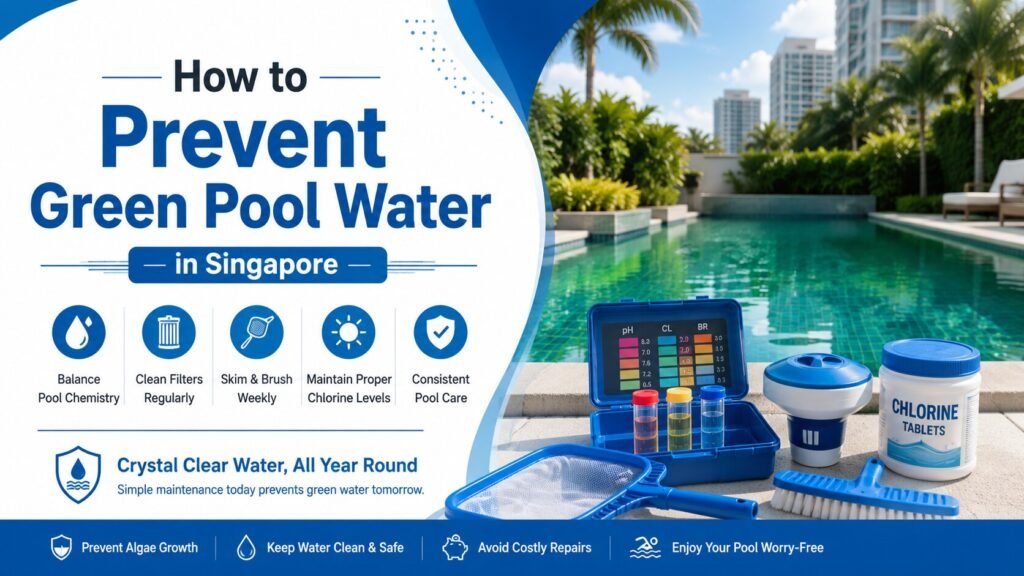
Nothing ruins a weekend swim faster than walking out to a pool that’s turned an unappealing shade of green overnight. In Singapore’s hot, humid climate, this isn’t a rare accident. It’s one of the most common calls pool owners make to a maintenance contractor, especially between April and November when rain and heat both push water chemistry off balance. The good news is that green pool water is almost always preventable. It comes down to a handful of habits around sanitizer levels, filtration, and routine checks. Here’s what actually causes it, and what you can do to keep it from happening to your pool.
Why Pools Turn Green in the First Place
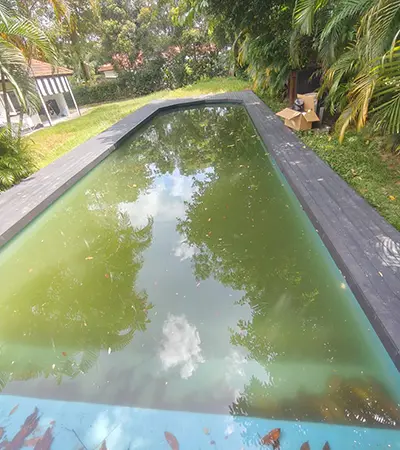
Green water is algae, plain and simple. Algae spores are airborne and waterborne, and they land in every outdoor pool in Singapore whether you notice them or not. The reason some pools stay crystal clear while others turn green within days comes down to whether the water conditions let those spores multiply. Three conditions tend to line up at once:
- Low or inconsistent chlorine levels: Chlorine (or another sanitizer) is what kills algae spores before they can establish themselves. Once levels dip below the recommended range for even a day or two, especially during heavy rain, algae gets the opening it needs.
- Poor circulation and filtration: Dead spots in the water, a clogged filter, or a pump that isn’t running long enough each day all give algae still water to grow in.
- Imbalanced pH and unstable water chemistry: High pH reduces how effective your chlorine actually is, even if the reading on the test strip looks fine on paper.
Singapore’s climate makes all three of these harder to manage than in cooler countries. Intense sun burns off chlorine faster, sudden downpours dilute sanitizer and shift pH within minutes, and the year-round heat means algae growth doesn’t slow down the way it would somewhere with a proper winter. If you’ve had recurring issues, it’s worth reading through common swimming pool problems in Singapore homes and how to fix them to see whether green water is connected to something else, like a struggling pump or an old filter.
Early Warning Signs Before the Water Turns Fully Green
Green water rarely happens without warning. Catching the early stages means you can usually fix things with a shock treatment and a filter clean, rather than a full recovery job.
Watch for:
- Water that looks slightly cloudy or has lost its usual sparkle
- A faint green or yellow tint along the pool steps or in corners with less circulation
- Slippery walls or floor, which usually means algae has already started forming a film
- A chlorine smell that’s weaker than usual, or test readings that keep dropping faster than expected
If your water has already gone cloudy rather than green, the underlying causes overlap quite a bit, and our guide on how to fix cloudy or milky swimming pool water fast walks through the difference and how to address it before it progresses further.
Practical Steps to Keep Your Pool From Turning Green
1. Keep sanitizer levels consistent, not just topped up occasionally
Free chlorine should generally sit between 1–3 ppm for residential pools, though the right number depends on your pool type and bather load. The mistake most homeowners make isn’t forgetting to add chlorine, it’s adding it inconsistently. A pool that gets a big dose once a week and nothing in between will have long stretches where sanitizer is too low to stop algae. If you’re weighing up sanitizer options for a new or renovated pool, our comparison of saltwater vs chlorine pools for Singapore homes covers which system tends to hold steadier levels with less manual effort, and a salt chlorinator installation is worth considering if you’re tired of manually dosing.
2. Test water chemistry weekly, not just when something looks off
pH, alkalinity, and chlorine should all be checked on a set schedule rather than reactively. Waiting until the water looks cloudy means you’re already behind. This is one of the core habits covered in why weekly pool maintenance is essential for Singapore homeowners, and it’s the single easiest way to catch a chemistry drift before algae has a chance to take hold.
3. Run your filtration system long enough each day
Most residential pools in Singapore need at least 6–8 hours of filtration daily, sometimes more depending on pool size, bather load, and surrounding foliage. A pump that’s undersized or a filter that hasn’t been cleaned in months won’t move enough water to keep algae from settling. If you’re not sure your filter is doing its job, the complete guide to swimming pool filter servicing in Singapore explains how often filters should be cleaned or replaced based on filter type.
4. Be extra vigilant during the rainy season
Heavy rain doesn’t just dilute chlorine, it also washes organic debris (leaves, dust, pollen) into the pool, which acts as food for algae. If you notice your water quality dropping every time there’s a storm, it’s worth reading swimming pool maintenance during Singapore’s rainy season for a checklist on what to test and adjust after rainfall.
5. Avoid the maintenance mistakes that quietly cause algae blooms
A surprising number of green pool cases trace back to habits that seem harmless: brushing the pool less often, skipping shock treatments after heavy pool use, or letting the water level drop too low for the skimmer to work properly. Our breakdown of top swimming pool maintenance mistakes Singapore homeowners make covers the ones we see most often on service visits.
6. Brush and vacuum regularly, even if the water looks clear
Algae often starts as a thin film on walls and in corners before it’s visible in the water itself. Brushing weekly disrupts that film before it can spread. Pools with rougher or older surfaces, including those overdue for regrouting, tend to hold onto algae more stubbornly because the texture gives spores more surface area to grip.
What to Do If Your Pool Has Already Turned Green
If prevention didn’t happen in time and you’re already looking at green water, don’t panic, but also don’t just dump in chlorine and hope for the best. A proper recovery involves shock dosing at the correct level for how far gone the water is, filtering continuously (sometimes for 24–48 hours straight), and rebalancing pH once the algae has cleared. Our Green Swimming Pool recovery guide for Singapore walks through the full process step by step, including how to tell whether you’re dealing with algae or a metal stain that just looks similar.
Prevention Is Cheaper Than Recovery
Recovering a fully green pool takes chemicals, time, and often extra filter cartridges or pump runtime that add to your electricity and water bills. Regular upkeep costs far less over a year than the occasional emergency fix. This is one of the points we cover in why regular pool maintenance saves you money long term, and if utility costs are part of what’s holding you back from running your filter longer, our guide on How to save on water and electricity with proper pool maintenance has practical ways to bring that cost down without cutting corners on filtration.
When to Bring in a Professional
Some pool owners are happy to test and dose their own water weekly. Others would rather hand it off entirely, and that’s a reasonable call, especially for larger pools, pools with older equipment, or households that travel often. A professional service keeps a consistent testing schedule, spots early warning signs during routine visits, and catches equipment issues before they turn into algae problems. If you’re deciding between DIY upkeep and hiring help, Our Complete Guide to Swimming Pool Cleaning services in Singapore and How to choose the best swimming pool maintenance contractor in Singapore are good starting points.
The Bottom Line
Green pool water isn’t bad luck. It’s almost always the result of chlorine dipping too low, filtration falling short, or water chemistry drifting unchecked, usually all three happening quietly at once. Singapore’s heat and rainfall make it easier for these gaps to open up, which is exactly why a consistent weekly routine matters more here than in most climates. Stay on top of testing, keep your filter running and clean, and adjust after every heavy storm, and green water becomes a rare inconvenience rather than a recurring one.