
Pool Waterproofing Singapore
A failed waterproofing layer does not just cause a wet floor. It quietly destroys the structure beneath your tiles. We apply the right waterproofing system for your pool type and make it last.
EXCELLENTTrustindex verifies that the original source of the review is Google. Excellent services for my landed house pool repair at Bukit timah. They explained clearly what was wrong. They did regriuting and tiles repair work. Price very reasonable. Infinity pool services Very trustworthy company.Posted on GoogleTrustindex verifies that the original source of the review is Google. Had a serious issue with my swimming pool, including water leakage, damaged tiles, and worn-out grout. I decided to engage Infinity Pool Services Pte Ltd for a full inspection and repair, and I’m very glad I did. From the start, their team was professional and experienced. They carefully checked the pool and clearly explained the problems, including the need for proper waterproofing, pool repair, and re-grouting work. They also recommended tile replacement where necessary. The renovation process was well managed. They carried out waterproofing works, pool tiling, and pool grouting with great attention to detail. The workmanship was neat, and everything was done properly without shortcuts. After the repair and renovation, the pool looks completely new. Most importantly, the leakage issue has been fully resolved. The water quality is now stable, and the overall finish is excellent. I highly recommend Infinity Pool Services Pte Ltd for anyone looking for pool renovation, pool waterproofing, pool repair, tiling work, or pool grouting in Singapore. The team is reliable, skilled, and delivers quality results. Very satisfied with their service and professionalism.Posted on GoogleTrustindex verifies that the original source of the review is Google. Infinity Pool Services has been excellent from start to finish. Their knowledge is outstanding, and their attention to detail is truly impeccable. They did an amazing job with the pool regrouting — the pool genuinely looks like new again. They also continue to handle our weekly pool maintenance, and the standard of care has been consistently excellent. The team is professional, reliable, and clearly takes great pride in their work. We are very happy with their service!Posted on GoogleTrustindex verifies that the original source of the review is Google. Infinity Pool Services Pte Ltd has been maintaining and repairing our landed home swimming pool, including tile repair, tile replacement, and full pool regrouting. Their workmanship is solid, pricing is fair, and communication is clear throughout the job. They don’t rush the work and always ensure proper finishing and testing before handover. A very trustworthy company with strong technical knowledge. We are extremely satisfied and will continue using their services.Posted on GoogleTrustindex verifies that the original source of the review is Google. Infinity Pool Services Pte Ltd has been maintaining and carrying out necessary repairs for my swimming pools at both Sentosa and Tanglin properties for the past 5 years. They are true Singapore swimming pool experts — professional, reliable, and always deliver high-quality pool maintenance and repair work at affordable prices.Posted on GoogleTrustindex verifies that the original source of the review is Google. If you’re looking for reliable and high-quality swimming pool service or repair, I highly recommend Infinity Pool Services. They did excellent pool grouting work for my pool at a very reasonable price. The team was professional, efficient, and provided great customer support from start to finish.Posted on GoogleTrustindex verifies that the original source of the review is Google. Great and professional cleaning service provided for my semi-d poolPosted on GoogleTrustindex verifies that the original source of the review is Google. Now my pool is super . infinity pool services Thanks. One time clean and now continue do swimming pool services great infinity pool team.
Pool Waterproofing Specialists in Singapore
Most pool problems trace back to the same root cause: a waterproofing layer that has failed or was never applied correctly in the first place.
At Infinity Pool Services, pool waterproofing is not a general construction task for us. We specialise in swimming pools specifically, which means we understand the water pressure, chemical exposure, and structural movement that pool waterproofing must withstand in Singapore’s climate.
We serve private landed homeowners, condominium management teams, and penthouse clients across Singapore. Whether you need waterproofing as part of a renovation or as a standalone repair, we get it done properly.
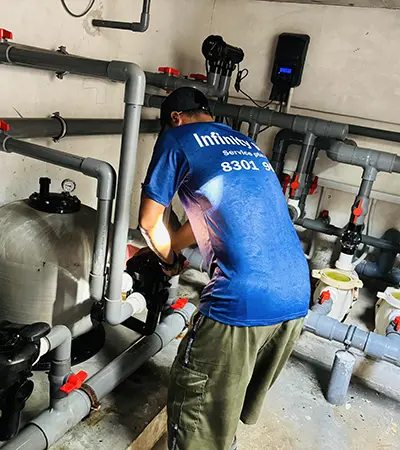
What Is Pool Waterproofing and Why Does It Matter
Pool waterproofing is the application of a protective membrane or coating system to the internal surfaces of a swimming pool. Its job is to prevent water from escaping through the pool shell into the surrounding structure.
Without a proper waterproofing layer, water seeps through concrete or screed over time. This causes tiles to detach, grout to fail, steel reinforcement inside the concrete to rust, and the surrounding ground or building structure to be damaged by continuous moisture.
In Singapore's heat and humidity, the stress on a pool's waterproofing layer is constant. Pools here typically need a waterproofing inspection every 5 to 8 years. Pools over 10 years old without a waterproofing history should be assessed as a priority.
Signs Your Pool Waterproofing Has Failed
Waterproofing failure is gradual. By the time you see obvious damage, the membrane has usually been failing for some time.
Tiles Detaching from Pool Walls or Floor
When the waterproofing layer breaks down, water moves behind the tile adhesive and weakens the bond. Tiles begin to lift and detach. Replacing tiles without first fixing the waterproofing means the same problem will return within a year or two. Our Pool Repair & Renovation page covers what happens when this is left too long.
Persistent Damp Patches Around the Pool
Wet soil, soft ground, or damp concrete near the pool edge points to water escaping through the shell. This is a clear sign the waterproofing barrier has a breach.
Constant Water Level Drop
If your pool is losing water consistently and there is no obvious plumbing fault, the waterproofing membrane is often the cause. The water is slowly passing through the pool structure. Our team can confirm this during a Pool Leak Detection inspection.
Visible Staining or Efflorescence on Pool Surfaces
White chalky deposits on pool walls, known as efflorescence, appear when water carries mineral salts through the concrete as it seeps. This is a direct indicator of moisture movement through the pool shell.
Cracking or Blistering of the Pool Surface Coating
When the waterproofing membrane degrades, the surface coating above it loses its stable base. Cracks, bubbles, and blistering appear on the pool floor and walls.
Rust Stains Appearing on Pool Surfaces
Brown or orange staining on the pool floor or walls often indicates that steel reinforcement bars inside the concrete are rusting due to water penetration. This is a serious structural sign and requires immediate attention.
Waterproofing Methods We Use
We match the waterproofing system to the specific pool type, condition, and client requirements. We do not apply one system to every job.
Cementitious Waterproofing
A cement-based waterproofing compound applied directly to the pool shell. This is suitable for pools with minor surface degradation and is a cost-effective option where the structure is still sound. It bonds tightly to concrete and is resistant to pool chemicals.
Liquid Applied Membrane (LAM)
A flexible, brush-applied membrane that cures to form a continuous waterproof layer. This method is well suited to pools with irregular shapes, steps, and curves because it follows the surface without joints or seams. It is one of the most widely used systems for pool waterproofing in Singapore.
Sheet Membrane Waterproofing
A pre-formed waterproofing membrane bonded to the pool substrate. Sheet membranes provide a highly consistent, measurable thickness and are used where precise waterproofing performance is required, such as rooftop and penthouse pools where any failure would affect lower floors.
Epoxy Coating Systems
Epoxy-based coatings are used where the pool surface needs a hard, chemical-resistant layer that also provides waterproofing. This system is common in older pools being fully refurbished as it also improves the surface finish.
Crack Injection and PU Grouting
For pools with active structural cracks, we use polyurethane or epoxy injection to seal the crack from inside the concrete. This stops water movement through the crack before a surface waterproofing system is applied. This is the correct sequence and cannot be skipped.
Our Pool Waterproofing Process
We follow a structured process that ensures the waterproofing we apply will perform properly and last
Free Site Inspection
We visit your property and assess the current condition of the pool surface, existing waterproofing layer, tile bond, and any visible signs of water movement. This is at no charge and includes a written assessment.
Pool Draining
The pool must be fully drained before any waterproofing work can begin. You cannot apply a waterproofing system to a wet or partially wet surface.
Surface Preparation
All loose tiles, failing grout, and deteriorated coating are removed. Cracks are repaired. The substrate must be clean, dry, and structurally sound before anything is applied. This step is where most poor-quality jobs fail. Skipping proper preparation means the waterproofing will not last.
Crack Injection (Where Required)
Any active structural cracks are injected with polyurethane or epoxy to seal them before the waterproofing membrane is applied. Applying membrane over an unrepaired crack will not hold.
Primer Application
A bonding primer is applied to prepare the surface to accept the waterproofing system. This improves adhesion and is required for most membrane systems.
Waterproofing System Application
We apply the agreed waterproofing system in the correct number of coats and to the specified dry film thickness. We do not reduce coats to save time. Correct application thickness is what determines how long the system lasts.
Curing Period
The waterproofing membrane is allowed to cure fully before any tiling or surface work begins above it. Applying tiles too early compromises the membrane.
Water Test
Before tiling, we conduct a flood test by ponding water on the waterproofed surface for 24 to 48 hours to confirm it is holding. Only when the test passes do we proceed to the next stage.
Tiling and Completion
Once waterproofing is confirmed, we proceed with tile laying and grouting. If this is a standalone waterproofing job with existing tiles to be replaced, see our Pool Repair & Renovation service for the full scope.
Types of Pools We Waterproof
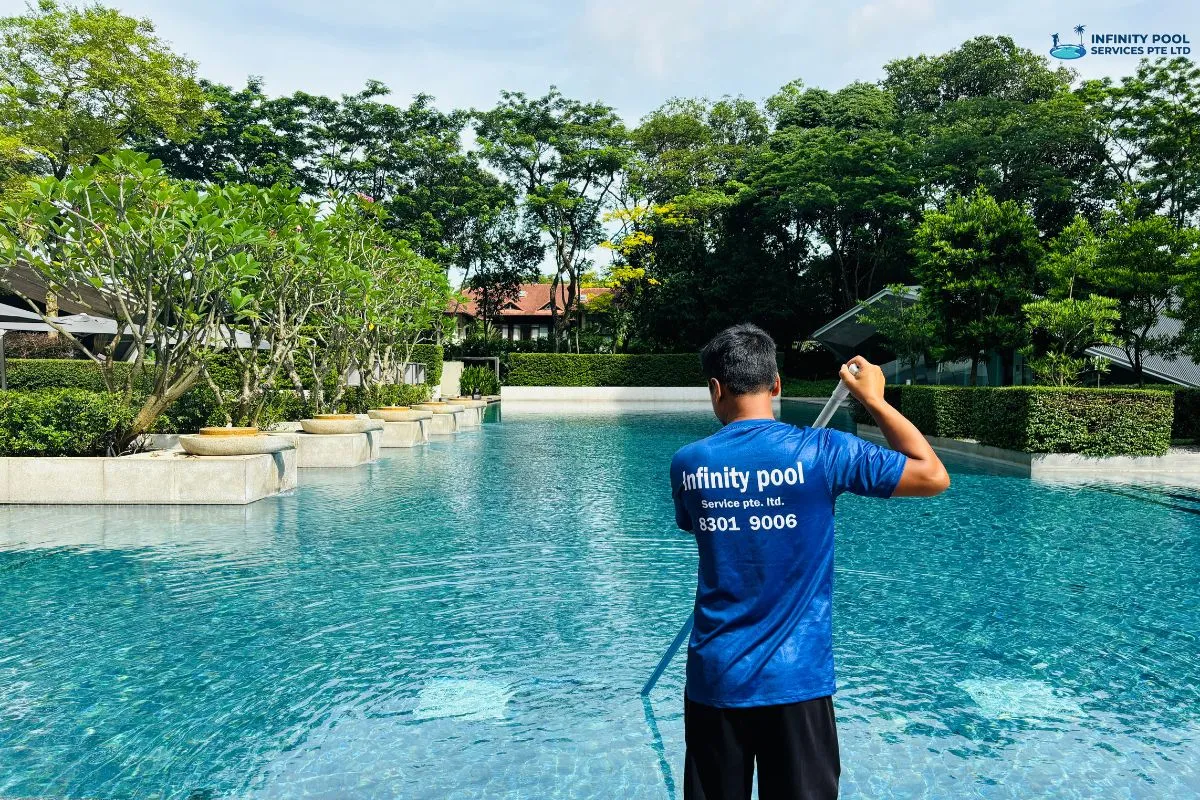
Landed Home Pools
Pools in private bungalows, semi-detached, and terrace houses make up a large part of our waterproofing work. Ground movement and aging structures mean these pools need waterproofing attention every 7 to 10 years. We work around your landscaping and home access with minimum disruption.
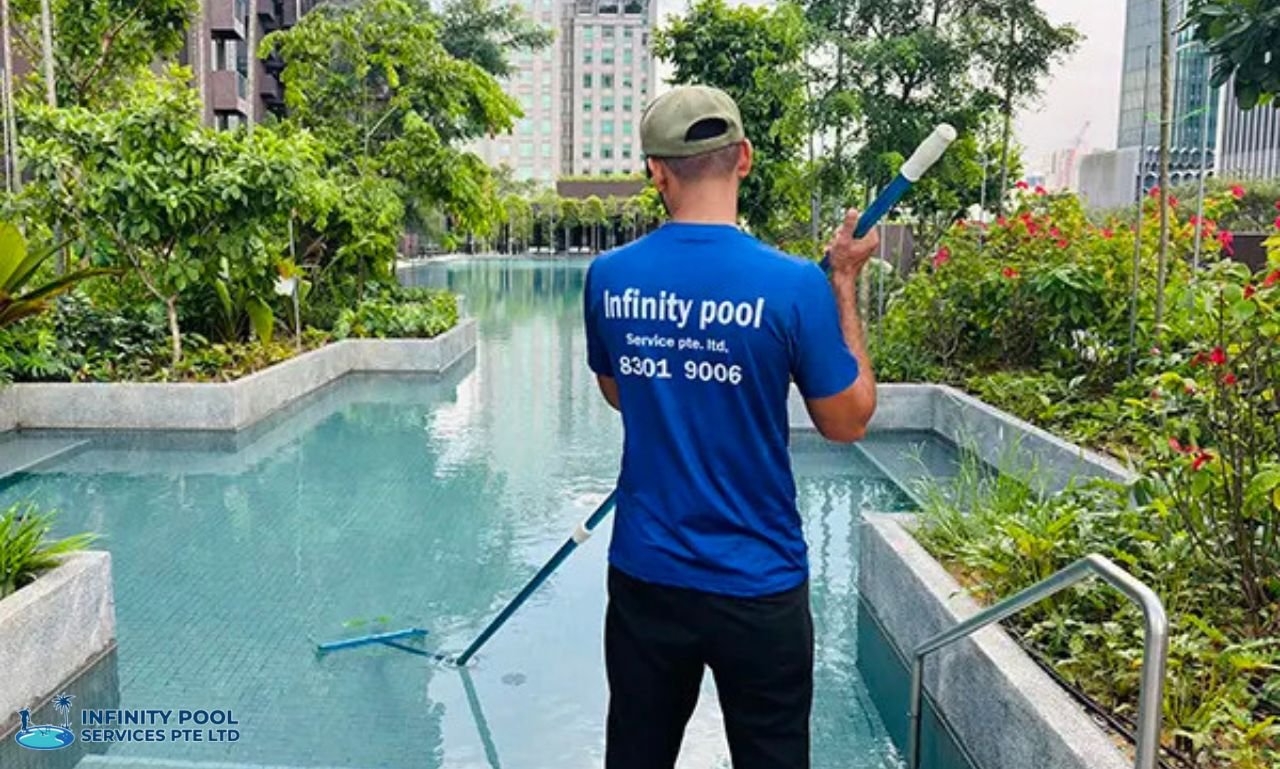
Condominium Pools
Condo pool waterproofing often involves coordination with MCST management and must meet building management standards. We handle the full scope including documentation, work scheduling within approved hours, and post-work reporting.
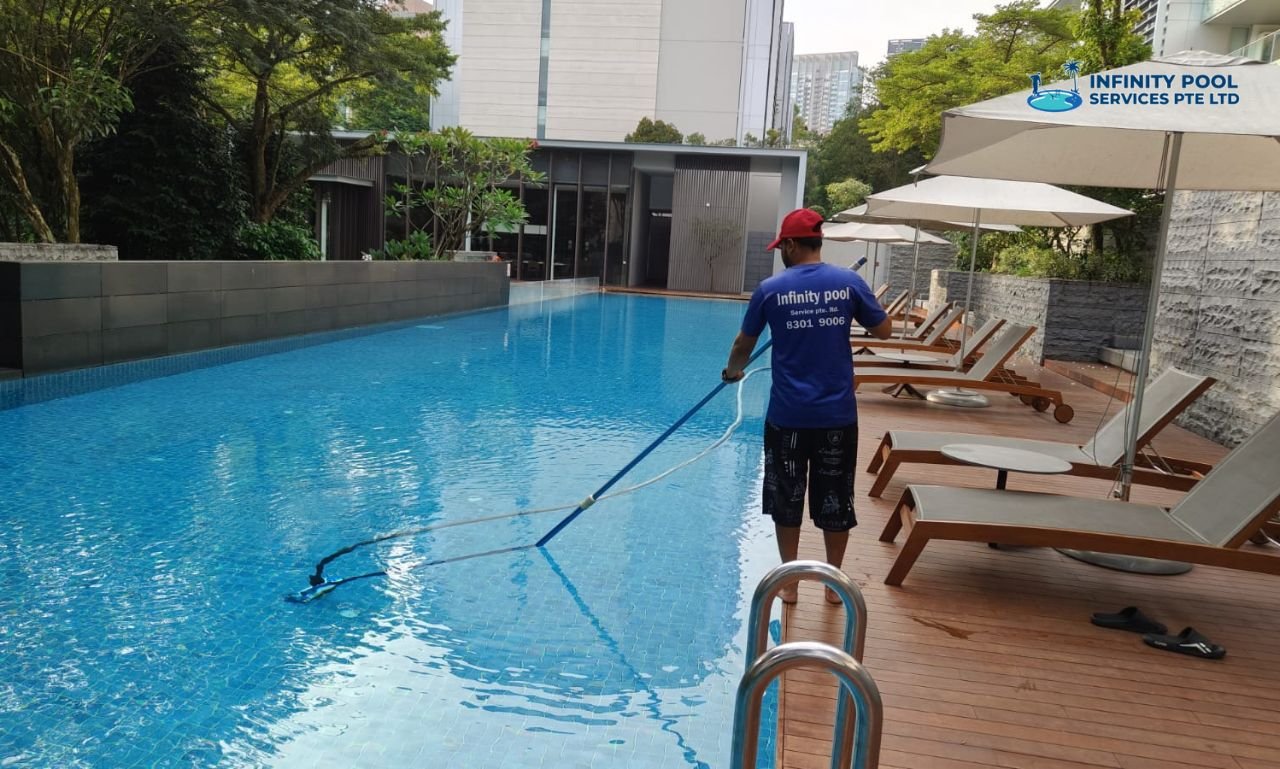
Penthouse and Rooftop Pools
Waterproofing a rooftop or penthouse pool is high-stakes work. A waterproofing failure at this level sends water directly into the floors below, potentially affecting multiple units. We use sheet membrane systems and conduct mandatory flood testing before considering any rooftop pool waterproofing job complete. This is non-negotiable.
Our Waterproofing Workmanship Guarantee
All pool waterproofing work we carry out is covered by a workmanship guarantee. If the waterproofing we applied fails within the warranty period due to our application workmanship, we return and rectify it at no cost.
We use quality-grade materials from reputable suppliers and apply them correctly. We do not use budget materials on premium properties and we do not reduce coat thickness to cut time.
Why Choose Infinity Pool Services for Pool Waterproofing in Singapore
Pool Specialists, Not General Contractors
We are a swimming pool company. Waterproofing is something we do as part of pool repair and renovation, not as a general building trade. We understand the specific demands of pool waterproofing including chemical resistance, hydrostatic pressure, and thermal movement that a general waterproofing contractor may not account for.
We Do Not Skip Surface Preparation
The most common reason waterproofing fails early is poor surface preparation. We take the preparation stage as seriously as the application stage. Every surface is properly cleaned, dried, and repaired before anything goes on.
Flood Testing on Every Job
We conduct a 24 to 48 hour water retention test before tiling over any waterproofing work. This is the only honest way to confirm a waterproofing system is performing before it is covered up.
15 Years of Singapore Pool Experience
We have been waterproofing, repairing, and maintaining pools across Singapore for over 15 years. We know which waterproofing systems hold up in Singapore's climate and which ones do not.
Free Site Inspection with No Obligation
We come to your property, assess the condition of the waterproofing, and give you a clear written quote. There is no charge for the inspection and no obligation to proceed.
Serving Singapore's Premium Residential Areas
We work across Bukit Timah, Sentosa Cove, Tanglin, Novena, Serangoon Gardens, Katong and East Coast. Our clients are landed homeowners and condo management teams who expect work to be done properly, first time.
Get a Free Pool Waterproofing Inspection
If your pool is showing any signs of waterproofing failure, early action saves you significant cost. Replacing tiles on a pool with failed waterproofing will not solve the problem. The right fix starts at the membrane level.
Let our team inspect your pool, identify exactly what needs to be done, and give you a fixed written quote.
Related Services
Pool waterproofing rarely stands alone. These services are commonly needed alongside or after waterproofing work.
Pool Repair & Renovation Singapore
Full structural and surface repair before or after waterproofing
Pool Leak Detection & Repair Singapore
To confirm whether a leak source is the waterproofing membrane
Pool Salt Chlorination Installation Singapore
Upgrade your chlorination system while the pool is drained for waterproofing
Swimming Pool Regrouting
If grout failure is the entry point for water
Swimming Pool Tile Repair & Replacement
Tile work that follows the waterproofing stage
Frequently Asked Questions: Pool Waterproofing Singapore
How often should a swimming pool be waterproofed in Singapore?
Most pools in Singapore need a waterproofing inspection every 5 to 8 years. Pools over 10 years old that have no documented waterproofing history should be inspected as a priority. Singapore’s heat and UV exposure accelerate membrane degradation compared to cooler climates.
Can pool waterproofing be done without removing the tiles?
In most cases, no. Effective pool waterproofing requires the membrane to be applied directly to the pool shell. Tiles need to be removed to expose the substrate, prepare it correctly, and apply the membrane. Attempting to waterproof over existing tiles will not produce a lasting result.
How long does pool waterproofing take?
The full process including draining, surface preparation, crack repairs, primer, membrane application, curing, and flood testing typically takes 5 to 10 working days depending on the pool size. The curing period alone usually takes 2 to 3 days before the flood test can be conducted.
How much does pool waterproofing cost in Singapore?
Pool waterproofing costs in Singapore typically range from SGD 3,000 to SGD 12,000 depending on the pool size, the waterproofing system selected, and the extent of surface preparation required. We provide a detailed fixed quote after the free site inspection.
What is the difference between cementitious waterproofing and membrane waterproofing for pools?
Cementitious waterproofing uses a rigid cement-based compound bonded to the pool shell. It is durable but not flexible, so it is better suited to pools with minimal structural movement. Membrane waterproofing uses a flexible material that can accommodate minor movement without cracking. For most Singapore residential pools, a liquid applied membrane or sheet membrane system provides longer-lasting performance.
Will my pool tiles look the same after waterproofing?
The waterproofing layer sits beneath the tiles and is not visible once the tiles are laid. You can choose the same tile design or use the renovation as an opportunity to update the look of your pool. We can advise on tile options during the inspection visit.
Can a rooftop or penthouse pool be waterproofed the same way as a ground-level pool?
The principles are the same but rooftop and penthouse pools require stricter waterproofing standards. We use sheet membrane systems at height and always conduct a mandatory 24 to 48 hour flood test before any tiling begins. A failure at roof level affects the floors below, so we treat these jobs with heightened care.
How do I know if my pool's waterproofing has failed or if it is just a plumbing leak?
A professional inspection and where needed a pressure test of the plumbing lines will confirm the source. Waterproofing failures tend to show as slow water loss, tile detachment, or damp ground around the pool. Plumbing leaks often show up as bubbles in the return jets, soft patches in the garden away from the pool edge, or a sudden jump in water loss. Our team covers both during a Pool Leak Detection visit.
Does the pool need to be completely drained for waterproofing?
Yes. We charge for the detection and diagnostic work separately from any repair work. You receive a written report first, then a separate quote for repairs. You are not committed to the repair just because you booked the detection.
What happens if pool waterproofing is applied over a cracked shell without crack repairs first?
The waterproofing membrane will follow the crack and fail at that point relatively quickly. Structural cracks must be properly injected and sealed before any membrane is applied. We always carry out crack repairs as part of the waterproofing preparation, not as an afterthought.