
If you own a private pool in Singapore, you already know it’s not a “set it and forget it” feature. Between the heat, the humidity, the daily afternoon showers, and the leaves that seem to find their way into the water no matter how far you are from a tree, a pool here works harder than a pool almost anywhere else in the world. That’s why the question we get asked most often by homeowners in Bukit Timah, Novena, Tanglin, and along the coast isn’t “do I need to service my pool” it’s “how often, exactly, should I be doing it?” There’s no single answer that fits every pool, but there is a clear framework, and that’s what this guide walks through.
Why Singapore’s Climate Makes Pool Servicing Non-Negotiable
Singapore sits close to the equator, which means consistent heat, high humidity, and rain almost year-round. That combination is rough on pool water and pool equipment for a few reasons:
- Warm water speeds up algae growth. A pool that might stay clean for two weeks in a temperate country can turn cloudy or green in Singapore within days if it’s neglected.
- Rain dilutes chlorine levels and introduces organic debris, which throws off your water chemistry every time there’s a storm.
- Humidity and salt-laden air, especially near the coast, accelerate wear on tiles, grout, pumps, and filters.
- Heavy usage during the hot season means more sunscreen, body oils, and sweat entering the water, all of which pool filtration systems have to work overtime to manage.
This isn’t just about aesthetics. A poorly maintained pool can become a genuine health hazard — bacteria, waterborne illness, and chemical imbalances aren’t rare problems, they’re common ones in pools that go too long between proper servicing. That’s the reason we treat this as a safety matter first and a cosmetic one second.
The General Rule: Weekly, Monthly and Quarterly Checkpoints
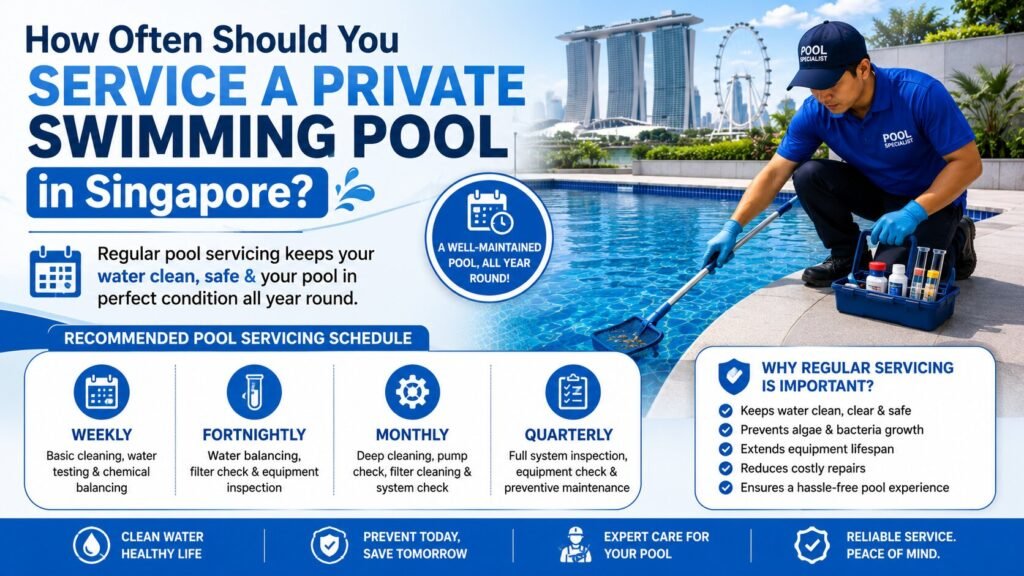
Most residential pools in Singapore fall into a fairly predictable servicing rhythm:
Weekly (or twice weekly for heavily used pools): Skimming debris, checking chlorine and pH levels, brushing the tiles and waterline, and vacuuming the pool floor. This is the baseline that keeps water safe to swim in and stops small problems from becoming big ones. Our Swimming Pool Cleaning service is built around this weekly cadence for exactly this reason.
Monthly: A closer look at the filtration system, backwashing where needed, and a check on water hardness and calcium levels, which build up over time and affect both water clarity and equipment lifespan. If your filter is more than a couple of years old, it’s worth reading up on filter servicing and replacement so you know what to expect.
Quarterly: This is when it’s worth having a technician physically inspect the pump, filter housing, and plumbing lines. Small leaks, worn seals, or a filter that’s losing efficiency are much cheaper to fix at this stage than after they fail outright. This is also a good time to review our recent post on How to detect hidden damage in swimming pools, since a lot of the issues that turn expensive start underground or beneath the tile line.
Every 6 to 12 months: A full equipment health check, including the pump motor, heater, and any automated dosing systems, along with a visual inspection of tiles and grout lines for early signs of cracking or lifting. If you’re on a saltwater setup, this is also the point to check chlorinator cells and salt levels through Our Saltwater pool system servicing.
If your pool sees daily use from a family with kids, or if it doubles as an entertaining space for guests, you’ll want to push toward the more frequent end of each range. A pool that’s rarely used, covered when not in service, and shaded for part of the day can sometimes stretch these intervals slightly.
Factors That Change the Equation
Where Your Home Is Located
Location genuinely matters more than most homeowners expect. A landed property in Bukit Timah, surrounded by mature trees, deals with far more leaf litter and organic debris than a condo pool in a more open estate, which means more frequent skimming and filter checks.
Homes near the water, like those in Sentosa Cove or Katong and the East Coast, face an additional challenge: salt air. It corrodes metal fittings, ladders, and pump housings faster than inland properties experience, so equipment inspections often need to happen on a tighter schedule.
In more established residential pockets like Novena, Tanglin, and Serangoon Gardens, older pools are common, and older plumbing and tiling tend to need closer, more regular attention simply because of age.
How the Pool Is Used
A pool used daily by a family, or one that hosts regular gatherings, accumulates oils, sunscreen, and organic matter far faster than one used occasionally. If your pool gets heavy traffic, weekly cleaning isn’t optional, it’s the minimum.
Surrounding Landscaping
Pools near gardens, grass, or trees pick up pollen, leaves, and soil runoff after rain. If you notice your filter basket filling up within a day or two of cleaning, that’s a sign your servicing interval needs to be shorter than the general guideline.
Pool Age and Equipment Condition
Older pumps and filters lose efficiency over time. A five-year-old system might need attention twice as often as a brand-new one just to keep performing at the same level, and worn equipment is often where a Pool Repair and Renovation project starts.
Signs Your Pool Needs Attention Right Now, Not Later
Some issues can’t wait for the next scheduled visit. Keep an eye out for:
- Green or cloudy water — usually algae, and it spreads fast in warm weather. Our Green Pool Recovery service exists specifically for this situation, and we’ve also put together a full guide on How to prevent green pool water in Singapore if you want to stop it from happening again.
- Cracked, loose, or discoloured tiles — this often points to underlying grout failure. Our Swimming Pool Tile Repair Replacement or Regrouting service can stop water from seeping behind the tiles and causing structural damage.
- Weak water flow or strange noises from the pump — could mean a failing motor or a blockage. Catching it early through pump repair and replacement work is far cheaper than a full pump replacement later.
- Water level dropping faster than evaporation would explain — a classic sign of a plumbing leak. Our plumbing repair service team handles this specific issue, and if the source isn’t obvious, Our Leak Detection Service can trace it without tearing up the entire pool deck. We’ve also broken down what pool leak detection and repair actually costs in Singapore, if you’d like a sense of budget before you call anyone.
- Cloudy water even with correct chemical levels — often the filter itself is due for a clean or a replacement, which is where filter servicing and replacement comes in.
None of these are cosmetic annoyances you can put off. Left alone, each one tends to get more expensive and more disruptive the longer it’s ignored.
What Happens When Servicing Gets Skipped
We’ve walked into more than a few pools that were left untouched for two or three months, usually because the homeowner was traveling or assumed the pool “looked fine” from a distance. The reality underneath is rarely fine. Algae takes hold in the plumbing lines, not just the visible water. Grout that looked intact starts crumbling once you scrape at it. Pumps that seemed to be running normally turn out to have been straining against a clogged filter for weeks.
The cost difference between routine servicing and emergency repair is significant, and it’s not just about money. A pool with unbalanced chemicals or hidden bacterial growth is a real risk to anyone who swims in it, particularly children and older adults. This is the core reason we treat pool servicing as a safety responsibility, not a luxury add-on, and it’s the same reasoning behind Our Equipment repair and replacement and pool waterproofing services catching wear before it becomes a failure.
Choosing Who Services Your Pool
Because pool maintenance touches on water safety, structural integrity, and electrical equipment, it’s worth being selective about who you trust with it. Look for a team that’s been doing this specifically in Singapore’s climate for years, not one that’s applying a generic maintenance checklist built for a different country’s weather patterns. Ask what chemicals they use, how they test water quality, and whether they inspect equipment as part of routine visits or only when something breaks.
A good technician won’t just clean your pool, they’ll flag small issues before they become expensive ones, whether that’s a hairline crack in the tiling, a pump that’s starting to sound different, or a light fixture nearing the end of its life, which is a common reason homeowners eventually look into underwater light replacement. You can read more about our approach and background on Our about page, or browse more pool care articles if you want to go deeper on a specific issue before your next service.
Putting It All Together
For most private pools in Singapore, the safe baseline looks like this: weekly cleaning and chemical checks, monthly filtration reviews, quarterly equipment inspections, and a full annual check covering tiles, grout, and major equipment. Adjust that schedule based on your location, how often the pool is used, and how much foliage surrounds it.
If you’re in Bukit Timah, Novena, Tanglin, Katong East Coast, Serangoon Gardens, or Sentosa Cove and you’re not sure where your pool currently stands, an inspection is the simplest way to find out. It’s far easier to build the right maintenance schedule once you know exactly what condition your pool and equipment are in today, rather than guessing and hoping the weather is kind to you. You can request a quote or get in touch directly, and we’ll walk you through what your pool actually needs.