
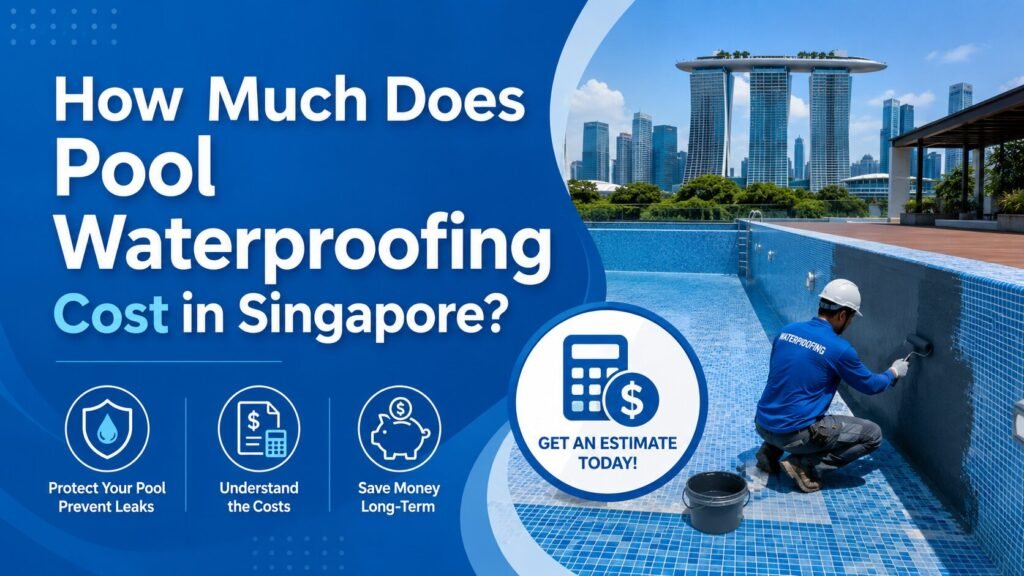
If you’ve started noticing damp patches around your pool deck, unusual cracks along the walls, or a steady drop in water level that you can’t explain, there’s a good chance your pool needs waterproofing attention. It’s one of those jobs that homeowners in Singapore often delay usually because they’re unsure what it involves or how much it will cost.
In this guide, we’re breaking down pool waterproofing costs in Singapore honestly and clearly. No vague ranges, no fluff. Just straightforward information drawn from years of on-the-ground experience as a swimming pool maintenance contractor in Singapore.
What is Pool Waterproofing and Why Does It Matter?
Before we get into numbers, it’s worth understanding what pool waterproofing actually does. Your pool shell whether it’s concrete, gunite, or fibreglass is constantly exposed to water, changing temperatures, and chemical treatments. Over time, the structural layers beneath the tiles develop micro-cracks and gaps. When these go unaddressed, water seeps through, weakens the structure, and eventually leads to significant damage both to the pool itself and the surrounding property.
Pool waterproofing involves applying a specialised membrane or coating to the pool’s internal surfaces. This creates a continuous barrier that prevents water from penetrating the shell. In Singapore’s humid, high-rainfall climate, this isn’t optional maintenance it’s a necessary part of responsible pool ownership. A properly waterproofed pool also performs better in terms of chemical balance, reduces the risk of algae buildup, and extends the lifespan of your tiles and grout. It’s closely related to swimming pool regrouting service in Singapore as well cracked or worn-out grout is often one of the earliest signs that waterproofing is overdue.
How Much Does Pool Waterproofing Cost in Singapore?
The cost of pool waterproofing in Singapore generally falls between SGD $1,500 and $8,000 or more, depending on the scope of the job. Here’s a more detailed breakdown:
| Pool Type / Scope | Estimated Cost (SGD) |
|---|---|
| Small residential pool (below 20 sqm) | $1,500 – $3,000 |
| Standard home pool (20–40 sqm) | $3,000 – $5,500 |
| Large or luxury residential pool | $5,500 – $8,000+ |
| Commercial pools (condos, hotels) | $8,000 – $20,000+ |
| Spot waterproofing (localised repair) | $500 – $1,500 |
These figures are estimates based on typical project costs in Singapore. The final price you pay will depend on several factors that we explain below.
Key Factors That Affect Pool Waterproofing Cost
1. Pool Size and Surface Area
This is the most straightforward factor. The larger the pool, the more materials and labour are required. Contractors typically price waterproofing work per square metre, so a sprawling 50-sqm pool will naturally cost more than a compact 15-sqm plunge pool.
2. Condition of the Existing Pool Shell
If your pool shell has serious structural damage deep cracks, spalled concrete, or significant water intrusion it needs to be repaired before waterproofing can be applied. This preparation work adds to the cost but is non-negotiable. Applying a waterproofing membrane over a damaged substrate is a short-term fix that fails quickly.
3. Type of Waterproofing System Used
There are several waterproofing systems used in Singapore, each with different properties and price points:
- Cementitious waterproofing — one of the more affordable options, often used for internal applications. Reliable but less flexible.
- Bituminous membrane — durable and flexible, well-suited to pools that experience ground movement.
- Polyurethane liquid membrane — highly flexible, excellent adhesion, and good for complex shapes. Costs more but tends to last longer.
- Crystalline waterproofing — penetrates the concrete and becomes part of the structure. Very durable and increasingly popular in Singapore.
A reputable swimming pool maintenance contractor in Singapore will recommend the right system based on your pool’s construction type, age, and current condition not just what’s cheapest.
4. Whether Tiles Need to Be Removed
For a thorough waterproofing job, tiles often need to be lifted so the membrane can be applied directly to the concrete substrate. This adds to both labour time and cost. If a contractor quotes a suspiciously low price without mentioning tile removal, it’s worth asking exactly how they plan to apply the waterproofing layer.
This is also where Swimming Pool Regrouting Service in Singapore becomes relevant. Once tiles are relaid after waterproofing, fresh grout is applied so both jobs are often done together, which can be more cost-efficient than treating them as separate projects.
5. Accessibility and Pool Design
Infinity pools, plunge pools, freeform pools, and pools with integrated water features or beach entries are more complex to waterproof than standard rectangular pools. Irregular shapes, multiple levels, and hard-to-reach areas all increase the time and skill required.
6. Contractor Experience and Reputation
Choosing a contractor based solely on the lowest price is one of the most common mistakes pool owners make. An under-qualified team may apply materials incorrectly or skip critical preparation steps, meaning you could be dealing with the same problem — or a worse one — within a year or two. A reliable swimming pool maintenance contractor in Singapore will provide a detailed quote, explain every step of the process, and offer a workmanship warranty.
Signs Your Pool Needs Waterproofing
Knowing when to act can save you a great deal of money. These are the most common indicators that your pool needs waterproofing:
You’re losing more water than normal. Some evaporation is expected in Singapore’s heat, but if your pool is dropping more than 6mm per day without heavy use, that’s a red flag.
Wet or damp patches around the pool area. Water seeping through the shell often shows up as wet spots on surrounding decking, planters, or walls — especially after a period of heavy rainfall.
Cracks on the pool floor or walls. Hairline cracks can develop over time in any concrete pool. They may not look serious, but they’re entry points for water to get behind the tiles and into the structure.
Staining or efflorescence. White, chalky deposits on pool walls are caused by dissolved minerals being pushed out through the concrete — a sign that water is moving through the structure.
Tiles coming loose. When the bond coat behind tiles deteriorates due to moisture, tiles start to pop off. If this is happening in multiple places, the waterproofing layer underneath has likely failed.
If you’re seeing any of these warning signs, it’s time to get a professional assessment.
Pool Waterproofing vs. Swimming Pool Regrouting: Which One Do You Need?
This is a question we get asked a lot. The short answer is that these are two different treatments that serve related but distinct purposes.
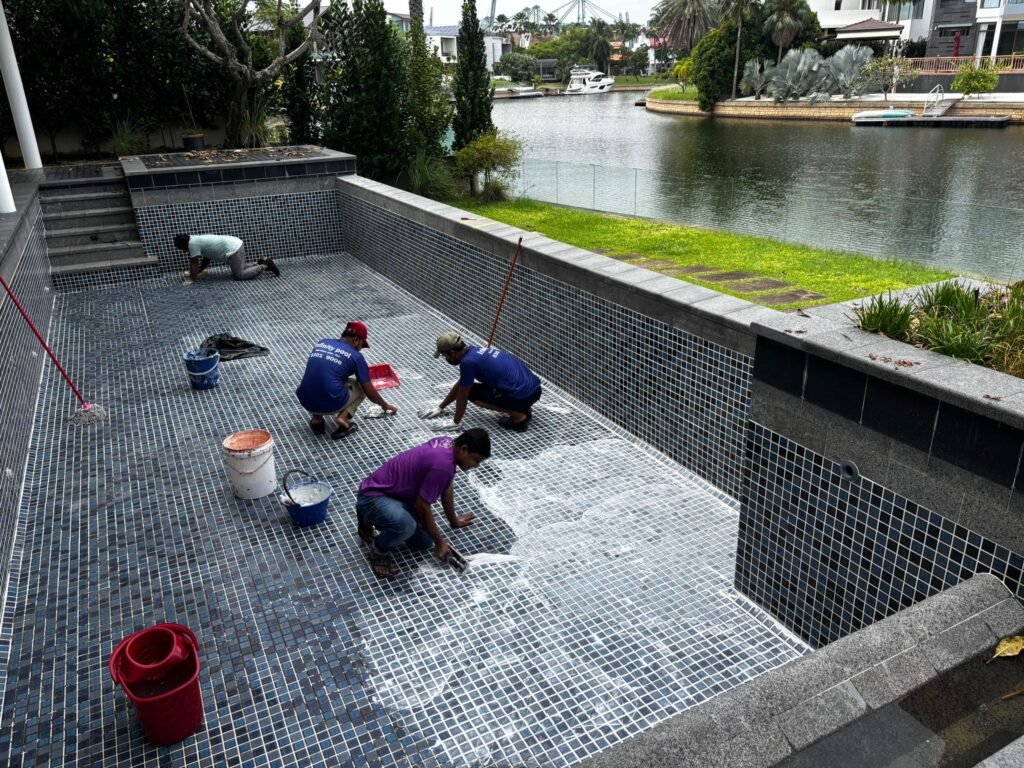
Swimming pool regrouting focuses on the grout lines between tiles. When grout cracks, discolours, or crumbles, water can penetrate behind the tile surface. A swimming pool regrouting service in Singapore involves removing the old grout and applying fresh, waterproof-grade grout to restore the seal between tiles.
Pool waterproofing goes deeper. It protects the concrete shell itself — the structural layer beneath the tiles and adhesive. When the underlying substrate is compromised, regrouting alone won’t solve the problem.
In many cases, both are needed together. When the pool is drained for waterproofing, it’s the ideal time to inspect the grout condition and regrout where necessary. This combined approach gives the pool comprehensive protection at multiple levels. At Infinity Pool Services Pte Ltd, we assess both during our initial inspection, so you get a clear picture of what’s actually needed — rather than a one-size-fits-all recommendation.
How Long Does Pool Waterproofing Last?
The lifespan of pool waterproofing depends on the quality of materials used, how well the surface was prepared, and how well the pool is maintained afterwards.
In general:
- Cementitious systems: 5–10 years
- Polyurethane membranes: 10–15 years
- Crystalline systems: 15–25 years (sometimes considered permanent when properly applied)
Regular maintenance by a trusted swimming pool maintenance contractor in Singapore significantly extends the life of any waterproofing system. Keeping water chemistry balanced, avoiding abrasive cleaning methods, and scheduling periodic inspections all make a real difference.
Is Pool Waterproofing Worth the Investment?
Some pool owners hesitate when they see the initial cost. But the comparison is straightforward: a proper waterproofing job costs a fraction of what you’d spend if the pool shell deteriorated to the point of requiring full structural repair or complete retiling. In Singapore, full pool renovation projects regularly run into the tens of thousands of dollars.
Beyond the financial side, there’s the practical consideration of property protection. Water that seeps from a pool into surrounding structures foundations, basements, retaining walls — can cause damage that extends well beyond the pool itself. When you factor in the longevity of a quality waterproofing job, the cost per year is quite reasonable. It’s a maintenance investment, not a luxury expense.
Why Choose Infinity Pool Services Pte Ltd for Pool Waterproofing in Singapore?
Infinity Pool Services Pte Ltd has been serving homeowners, condo managers, hotel operators, and commercial property owners across Singapore for over 15 years. Our team handles Pool Waterproofing Singapore projects of all sizes from compact residential pools in Bukit Timah and Katong to large commercial installations in Sentosa Cove and the Tanglin district.
Here’s what sets us apart:
Honest assessments before we touch anything. We send our team to inspect the pool, identify the root cause of any issues, and explain exactly what needs to be done. You won’t get a vague quote or pressure to accept unnecessary work.
High-quality materials and proven methods. We work with waterproofing systems that are suited to Singapore’s climate and your pool’s specific construction type. We don’t cut corners on materials because we know the long-term cost of doing so.
Comprehensive pool care under one roof. Pool waterproofing often needs to be paired with tile repair, swimming pool regrouting service, or structural repair work. As a full-service swimming pool maintenance contractor in Singapore, we handle everything — so you’re not coordinating multiple contractors.
Transparent pricing. Our quotes break down every part of the job. No hidden charges, no vague line items.
Aftercare support. Once the job is done, we don’t disappear. Our team is available for follow-up checks and ongoing pool maintenance to make sure everything is performing as expected.
Whether you need a full waterproofing treatment, a swimming pool regrouting service in Singapore, or just want a professional second opinion on your pool’s condition, we’re here to help.
Frequently Asked Questions
How long does the pool waterproofing process take?
For a standard residential pool, the process typically takes 3 to 7 days, depending on the scope of preparation work, the number of coats applied, and curing time. Larger or more complex pools may take longer.
Do I need to drain my pool completely?
Yes. The pool needs to be fully drained and allowed to dry before waterproofing materials are applied. Attempting to waterproof a wet surface leads to adhesion failure.
Can I waterproof just one part of the pool?
Spot waterproofing is possible for localised repairs, but in many cases, the underlying issue affects a larger area than what’s visible on the surface. A thorough inspection will determine whether a full treatment is needed or whether targeted repair is sufficient.
Will the waterproofing affect how my pool looks?
The waterproofing membrane is applied beneath the tiles or finish layer, so it is not visible. Your pool’s appearance is determined by the tiles, plaster, or pebble finish — not the waterproofing layer.
How soon can I refill the pool after waterproofing?
This depends on the specific product used. Most systems require at least 48 to 72 hours of curing time before the pool can be refilled. Your contractor will give you a specific timeline based on the materials applied.
Does pool waterproofing come with a warranty?
At Infinity Pool Services Pte Ltd, we offer a workmanship warranty on our pool waterproofing Singapore projects. The duration depends on the system used and the scope of the job — we’ll outline this clearly before work begins.
Get a Free Quote for Pool Waterproofing Singapore
If you’re concerned about your pool’s condition or want to get ahead of potential problems, the best first step is a professional inspection. Infinity Pool Services Pte Ltd offers free site assessments with no obligation. Call us at +65 8301 9006 or send an enquiry through our website to schedule a visit. We serve all major residential areas across Singapore, including Bukit Timah, Sentosa Cove, Tanglin, Serangoon Gardens, Katong, East Coast, and Novena. Your pool is a long-term investment. Protect it properly.