
A swimming pool is a valuable feature of any residential or commercial property. It provides a place to relax, exercise and enjoy time with family, friends or guests. However, like other parts of a property, swimming pools need regular maintenance and occasional repairs to remain in good condition.
Over time, pool surfaces, tiles, grout, pumps, filters and plumbing systems can develop problems. Some issues may appear small at first, but ignoring them can lead to more expensive repairs and potential safety concerns.
For example, a small crack may indicate a problem with the pool surface or structure. Damaged grout can allow water to reach areas behind the tiles, while a faulty filtration system can affect water circulation and clarity.
Singapore’s warm and humid climate, frequent rainfall and outdoor environmental conditions can also affect swimming pool maintenance requirements.
Knowing when your pool needs professional attention can help you address problems before they become more serious.
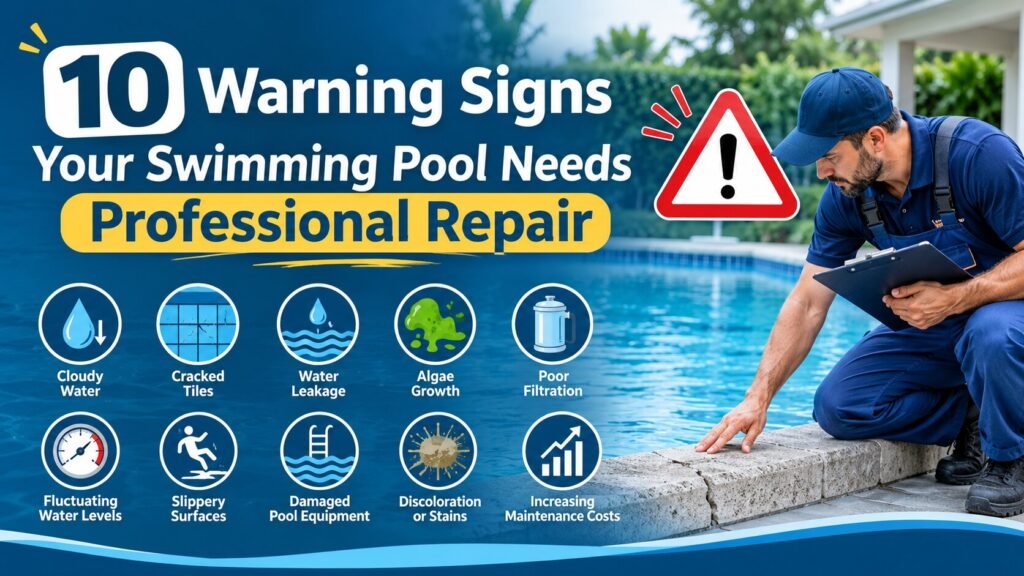
In this guide, we will explain 10 warning signs your swimming pool needs professional repair, why these problems happen and when to contact a professional swimming pool maintenance contractor in Singapore.
1. Your Swimming Pool Is Losing Water Faster Than Normal
One of the most important warning signs of a potential swimming pool problem is unexplained water loss.
All outdoor swimming pools lose some water naturally through evaporation and splashing. However, if the water level continues to drop more quickly than expected, there may be a leak.
Swimming pool leaks can develop in different areas, including:
- Pool walls and floors.
- Plumbing connections.
- Water circulation pipes.
- Pool lights and fittings.
- Skimmers and return lines.
- Damaged waterproofing.
- Cracked pool surfaces.
Why Does Swimming Pool Water Leakage Happen?
Several factors can contribute to pool leakage. Ageing materials, structural movement, damaged pipe connections and deteriorating waterproofing are common possibilities.
For example, a crack in the pool structure may allow water to escape slowly. A damaged pipe below the pool surface can also cause water loss without creating an obvious wet area.
What Should You Do?
Start by monitoring the water level and checking whether there are visible signs of leakage around the pool.
A bucket test can help compare normal evaporation with potential pool water loss. However, it cannot identify the exact location or cause of a leak.
If water loss continues, arrange a professional inspection. A technician may use specialised leak detection methods to identify the source before recommending a suitable repair.
2. You Notice Cracks in the Swimming Pool Surface
Cracks are another warning sign that should not be ignored.
Swimming pool cracks can develop on plaster finishes, concrete surfaces, tiles or other parts of the pool structure.
Not all cracks indicate serious structural damage. Some may be limited to the surface finish, while others may be related to movement, construction defects or waterproofing problems.
Common Causes of Swimming Pool Cracks
Some possible causes include:
- Ground movement or settlement.
- Structural movement.
- Poor construction or installation.
- Temperature-related material movement.
- Ageing pool finishes.
- Water pressure and surrounding ground conditions.
Why Should You Repair Pool Cracks?
Even small cracks can allow water to penetrate behind surface finishes or reach underlying materials.
If the problem is left untreated, it may contribute to further deterioration, water leakage or damage to surrounding structures.
When Should You Call a Professional?
Contact a swimming pool repair specialist if you notice:
- Cracks that are becoming wider or longer.
- Cracks accompanied by water loss.
- Multiple cracks appearing in different areas.
- Loose or damaged tiles around the affected area.
- Changes in the surrounding pool structure.
A professional inspection can help determine whether the issue requires surface repair, waterproofing work or more extensive structural assessment.
3. Your Pool Tiles Are Loose, Cracked or Falling Off
Swimming pool tiles are exposed to continuous water contact, chemical treatment, temperature changes and normal wear.
Over time, tiles may become loose, crack or detach from the pool surface.
Damaged tiles are not only an appearance problem. Sharp or loose tile edges can create hazards for swimmers, while widespread tile failure may indicate problems with the adhesive, substrate or waterproofing system.
Common Reasons for Swimming Pool Tile Damage
- Ageing tile adhesive.
- Poor original installation.
- Movement in the pool structure.
- Water penetration behind tiles.
- Deteriorating grout joints.
- Incorrect chemical balance or unsuitable maintenance practices.
Signs Your Pool Tiles Need Repair
Look for the following warning signs:
- Tiles that move when touched.
- Cracked or missing tiles.
- Hollow sounds when tiles are tapped.
- Damaged tile edges.
- Missing grout between tiles.
- Repeated tile detachment in the same area.
Avoid attempting to remove or replace underwater pool tiles without understanding the underlying cause.
A professional technician should inspect the affected area and determine whether localised tile replacement, regrouting or more extensive repair work is needed.
4. Your Swimming Pool Grout Is Cracking or Falling Out
Swimming pool grout plays an important role in maintaining the joints between tiles.
It helps protect the tiled surface and contributes to the overall finish of the pool. However, grout can deteriorate over time because of ageing, movement, installation problems and unsuitable water conditions.
Common Signs of Damaged Pool Grout
- Cracked grout lines.
- Missing grout between tiles.
- Discoloured or deteriorating joints.
- Loose tiles.
- Gaps around pool steps and corners.
- Repeated grout failure in the same location.
Why Is Swimming Pool Regrouting Important?
Damaged grout can allow water to penetrate behind tiled finishes and may contribute to further deterioration.
However, grout damage does not automatically mean that the pool has a structural leak. The underlying condition should be inspected before choosing a repair method.
Professional regrouting may help restore damaged tile joints and improve the appearance of the swimming pool.
When Do You Need Professional Regrouting?
If you notice widespread grout damage, missing grout or repeated tile problems, consider arranging a professional inspection.
The correct repair method depends on the condition of the existing grout, tile adhesion and underlying surface.
Learn more about professional swimming pool regrouting in Singapore.
5. Your Swimming Pool Water Keeps Turning Green
Green swimming pool water is a common problem that can indicate algae growth or inadequate water treatment.
Algae can develop when sanitiser levels are insufficient, water circulation is poor or filtration is not working effectively.
Heavy rainfall, debris and changing environmental conditions can also increase the maintenance requirements of outdoor swimming pools in Singapore.
Common Reasons for Green Pool Water
- Insufficient chlorine or other sanitiser.
- Poor water circulation.
- Dirty or inefficient filters.
- Incorrect water balance.
- Inadequate pool cleaning.
- High organic contamination.
- Algae growth on pool walls and floors.
Why Should You Address Green Pool Water Quickly?
Green water can make it difficult to see the pool floor and identify potential hazards.
Algae growth may also spread across pool walls, steps and other surfaces if the underlying water treatment problem is not corrected.
Do not assume that adding more chlorine will solve every green pool problem. The correct treatment depends on water testing, the type of contamination, circulation and filtration performance.
How Can You Recover a Green Swimming Pool?
A professional recovery process may involve:
- Inspecting the pool and identifying the cause of the problem.
- Testing relevant water quality parameters.
- Checking the pump and filtration system.
- Removing visible debris and algae.
- Applying appropriate treatment based on test results.
- Cleaning and filtering the water.
- Retesting before the pool is returned to use.
Avoid swimming in visibly green or inadequately treated water until the water condition has been assessed and confirmed suitable.
If your pool has developed green water, explore Infinity Pool Services Pte Ltd’s green swimming pool recovery service.
6. Your Swimming Pool Water Is Constantly Cloudy
Cloudy swimming pool water is another problem that may indicate poor filtration, chemical imbalance or suspended particles.
A swimming pool can become cloudy even when the water does not look green.
Common Causes of Cloudy Pool Water
- Incorrect pH levels.
- Inadequate sanitiser levels.
- Dirty or damaged filtration media.
- Poor water circulation.
- High levels of suspended particles.
- Excessive organic contamination.
Why Does Cloudy Water Need Attention?
Cloudy water reduces visibility inside the swimming pool. This can make it harder to identify swimmers who may be in difficulty or spot objects and hazards underwater.
It may also indicate that the pool’s filtration or disinfection system is not performing properly.
What Should You Do?
Start with a water quality test and inspect the filtration system.
Check whether the pump is operating correctly and whether the filter needs cleaning or servicing.
If the problem continues after routine cleaning and appropriate water treatment, a professional technician should inspect the pool system.
7. Your Swimming Pool Pump Is Making Unusual Noises
A swimming pool pump is responsible for circulating water through the filtration and treatment system.
When the pump develops a mechanical or electrical problem, you may notice unusual sounds or reduced performance.
Common Swimming Pool Pump Warning Signs
- Grinding or rattling sounds.
- Excessive vibration.
- Unusual humming.
- Reduced water circulation.
- Frequent pump shutdowns.
- Water leakage around pump connections.
- Difficulty starting the pump.
Why Do Pool Pumps Become Noisy?
Several problems may cause unusual pump noises, including:
- Worn bearings.
- Air entering the pump system.
- Blocked pump baskets.
- Cavitation.
- Loose mounting components.
- Motor problems.
- Damaged internal parts.
For example, a grinding noise may indicate worn mechanical components, while a humming pump that fails to start could have an electrical or motor-related issue.
When Should You Arrange Pump Repair?
If the pump produces unusual noises, repeatedly stops or loses circulation performance, arrange a professional inspection.
Avoid opening electrical components or attempting repairs without suitable training. Pool equipment combines water and electricity, so repairs should be handled by appropriately qualified technicians.
8. Your Swimming Pool Filter Is Not Working Properly
A swimming pool filtration system removes suspended particles and helps maintain clear water.
If the filter becomes blocked, damaged or inefficient, the pool may struggle to maintain good water clarity.
Signs of Swimming Pool Filter Problems
- Water remains cloudy despite cleaning.
- Filter pressure is consistently abnormal.
- Water circulation becomes weaker.
- The filter requires unusually frequent cleaning.
- Sand or other filter media appears in the pool.
- The system develops leaks.
What Causes Filter Problems?
Common causes include accumulated debris, damaged filter components, worn seals, incorrect backwashing practices and ageing filtration media.
Different filter types also have different maintenance requirements.
For example, sand filters may need backwashing or media replacement, while cartridge filters require appropriate cleaning and eventual replacement.
Why Is Professional Filter Servicing Important?
A technician can inspect the filter, assess pressure readings and determine whether cleaning, repair or replacement is necessary.
Regular filter maintenance helps support effective water circulation and reduces unnecessary strain on the pool system.
9. You Notice Rust, Corrosion or Damaged Pool Fittings
Swimming pools contain several metal components, including ladders, handrails, screws, fittings and equipment connections.
Over time, these components may develop rust or corrosion.
Common Signs of Corrosion
- Rust stains around pool fittings.
- Corroded metal ladders or handrails.
- Damaged screws and brackets.
- Discolouration around metal components.
- Deteriorating equipment connections.
- Rough or sharp surfaces.
What Causes Pool Equipment Corrosion?
Possible causes include unsuitable material selection, ageing components, water chemistry issues and exposure to unsuitable environmental conditions.
Incorrect water balance can contribute to corrosion in some pool systems.
When Should You Repair or Replace Damaged Fittings?
Any loose, sharp or significantly corroded component should be assessed promptly.
A professional technician can determine whether the affected fitting can be repaired or should be replaced with a suitable pool-grade component.
For commercial swimming pools, damaged ladders, handrails and other swimmer-contact components deserve particular attention because they can create direct safety hazards.
10. Your Swimming Pool Waterproofing Is Failing
Waterproofing helps prevent swimming pool water from escaping through the underlying structure.
If the waterproofing system deteriorates, water may penetrate surrounding materials and potentially damage nearby structures.
Warning Signs of Swimming Pool Waterproofing Problems
- Persistent unexplained water loss.
- Damp patches around the pool.
- Water seepage in adjacent areas.
- Repeated tile or grout failure.
- Cracks in the pool surface.
- Moisture appearing around pool structures.
However, these signs do not always confirm waterproofing failure. Leaking pipes, fittings, drainage problems and other issues can produce similar symptoms.
Why Is Professional Waterproofing Repair Important?
Applying a new surface coating without identifying the actual source of water leakage may not solve the problem.
A professional assessment should identify whether the issue involves the pool structure, waterproofing membrane, plumbing or tiled finish.
Depending on the findings, the repair may involve removing damaged finishes, preparing the substrate, applying a suitable waterproofing system and reinstating the pool surface.
For extensive damage, consider professional swimming pool repair and renovation services in Singapore.
When Should You Call a Professional Swimming Pool Repair Contractor?
Some minor pool maintenance activities can be handled by property owners or facility staff. However, problems involving structural cracks, water leakage, electrical equipment, damaged waterproofing and recurring tile failure need professional assessment.
Here is a simple guide to help you understand when to seek assistance.
| Pool Problem | Recommended Action |
|---|---|
| Small amounts of floating debris | Routine pool cleaning |
| Slightly unbalanced water | Test and correct according to pool requirements |
| Persistent green water | Professional water assessment and recovery |
| Unexplained water loss | Professional leak inspection |
| Cracked pool structure | Professional structural assessment |
| Loose or missing tiles | Professional tile inspection and repair |
| Damaged grout | Professional regrouting assessment |
| Noisy or malfunctioning pump | Professional equipment inspection |
| Electrical faults | Stop using affected equipment and contact a qualified technician |
| Waterproofing failure | Professional inspection and repair |
If a pool has visible contamination, poor water clarity or a potentially unsafe defect, restrict access where necessary until the problem has been assessed and corrected.
How Regular Swimming Pool Maintenance Prevents Expensive Repairs
Many swimming pool repair problems develop gradually.
For example, a small grout defect may become more widespread if it is ignored. A dirty filter can reduce circulation efficiency, while an unnoticed pump problem may eventually cause the system to stop working.
Regular maintenance helps identify these issues earlier.
Here are some important preventive maintenance practices.
1. Schedule Regular Pool Cleaning
Remove leaves, insects and other debris before they accumulate.
Brush pool surfaces and vacuum the floor according to the pool’s maintenance requirements.
2. Monitor Water Quality
Test relevant water parameters using appropriate methods.
Maintain suitable pH and sanitiser levels according to the pool system, product instructions and applicable requirements.
3. Inspect Pool Tiles and Grout
Check for loose tiles, cracks, missing grout and other visible surface problems.
Early inspection can help prevent minor defects from developing into more extensive repairs.
4. Maintain Pumps and Filters
Inspect pump operation, filter pressure and circulation performance.
Follow manufacturer instructions for cleaning and servicing equipment.
5. Arrange Professional Inspections
A professional technician can identify issues that may not be visible during routine cleaning.
This is particularly important for older swimming pools and facilities with high usage.
Why Choose Infinity Pool Services Pte Ltd for Swimming Pool Repair in Singapore?
When a swimming pool develops problems, choosing the right contractor is important.
Infinity Pool Services Pte Ltd provides swimming pool maintenance, repair and renovation solutions for residential and commercial properties in Singapore.
Whether you are dealing with damaged pool tiles, leaking water, deteriorating grout, green water or equipment problems, professional assessment can help identify the most suitable solution.
Swimming Pool Repair and Renovation
Swimming pool damage can affect both the appearance and functionality of your pool.
Infinity Pool Services Pte Ltd provides repair and renovation solutions to address pool surface problems, damaged finishes and other maintenance concerns.
Explore our swimming pool repair and renovation services in Singapore.
Professional Swimming Pool Regrouting
Damaged grout joints can affect tiled pool surfaces and may allow water to penetrate behind the tiles.
Infinity Pool Services Pte Ltd provides swimming pool regrouting services to help restore damaged grout joints and improve the condition of pool finishes.
Learn more about swimming pool regrouting.
Green Swimming Pool Recovery
Green water can develop because of algae growth, poor filtration, inadequate sanitisation or circulation problems.
The company provides green swimming pool recovery solutions to help identify and address these water quality issues.
Discover our green swimming pool recovery service.
Residential and Commercial Pool Maintenance
Different swimming pools have different maintenance requirements.
Infinity Pool Services Pte Ltd can discuss maintenance and repair requirements based on pool size, usage, equipment condition and property type.
If you are looking for a reliable Swimming Pool Maintenance Contractor in Singapore, contact Infinity Pool Services Pte Ltd to discuss your requirements.
Contact Information
- Website: https://infinitypool.com.sg/
- Phone: +65 8301 9006
- Email: infinitypoolsg@gmail.com
- Address: 11D St Michael’s Road, Singapore 327958
Frequently Asked Questions (FAQs)
1. How do I know if my swimming pool needs professional repair?
Common warning signs include unexplained water loss, structural cracks, loose tiles, damaged grout, green water, cloudy water, unusual pump noises and recurring filtration problems. If you notice these issues, arrange a professional inspection.
2. What is the most common swimming pool repair problem?
Common pool repair issues include water leakage, damaged tiles, deteriorating grout, pump problems, filtration faults and algae growth. The actual repair requirements depend on the pool’s age, construction, equipment and maintenance history.
3. Can a small swimming pool crack cause water leakage?
Yes. Some cracks can allow water to escape, but not every crack causes leakage. A professional inspection is needed to determine whether the crack affects only the surface finish or the underlying pool structure.
4. How often should a swimming pool be inspected?
The inspection frequency depends on pool usage, age, equipment and maintenance conditions. Regular visual checks should be part of routine maintenance, while professional inspections should be arranged according to the pool’s condition and service requirements.
5. Why does my swimming pool keep turning green?
Green pool water is commonly associated with algae growth. Inadequate sanitiser levels, poor circulation, dirty filters and unsuitable water conditions can contribute to the problem. Water testing and proper treatment are important to identify the cause.
6. Is swimming pool regrouting necessary?
Regrouting may be necessary when existing grout becomes cracked, missing or deteriorated. It helps restore damaged tile joints, but the pool should first be inspected to determine whether the problem involves grout, tile adhesion or underlying waterproofing.
7. How much does swimming pool repair cost in Singapore?
Swimming pool repair costs depend on the type and extent of damage, pool size, accessibility, materials and labour required. A minor grout repair will generally involve different work from structural crack repair or complete pool renovation. Request a professional assessment for an accurate quotation.
8. Can regular maintenance prevent swimming pool damage?
Regular maintenance can help identify early signs of damage and reduce the risk of some avoidable problems. However, it cannot prevent every issue because ageing, structural movement, equipment failure and environmental factors can still affect a swimming pool.
9. Should I continue using my swimming pool if it has a leak?
If you suspect a leak, arrange an inspection to determine its severity and cause. If there is structural damage, electrical risk or a potentially unsafe condition, stop using the affected pool until it has been assessed and made safe.
10. How do I choose a swimming pool maintenance contractor in Singapore?
Look for a contractor with relevant experience, a suitable range of maintenance and repair services, transparent quotations and good customer feedback. Check whether the contractor can handle your specific problem, including leak detection, regrouting, equipment servicing or renovation.
Final Thoughts
Swimming pool problems rarely improve when they are ignored. From unexplained water loss and structural cracks to damaged grout, green water and faulty pumps, recognising the warning signs early can help prevent more extensive damage.
Regular cleaning, water quality monitoring and equipment inspections are important for keeping a swimming pool in good condition. When a problem goes beyond routine maintenance, professional assessment is the safest way to identify the cause and choose the right repair solution.
If your residential or commercial swimming pool needs professional attention, contact Infinity Pool Services Pte Ltd. As a swimming pool maintenance contractor in Singapore, the company can help you explore suitable maintenance, repair, regrouting and recovery services for your pool.