
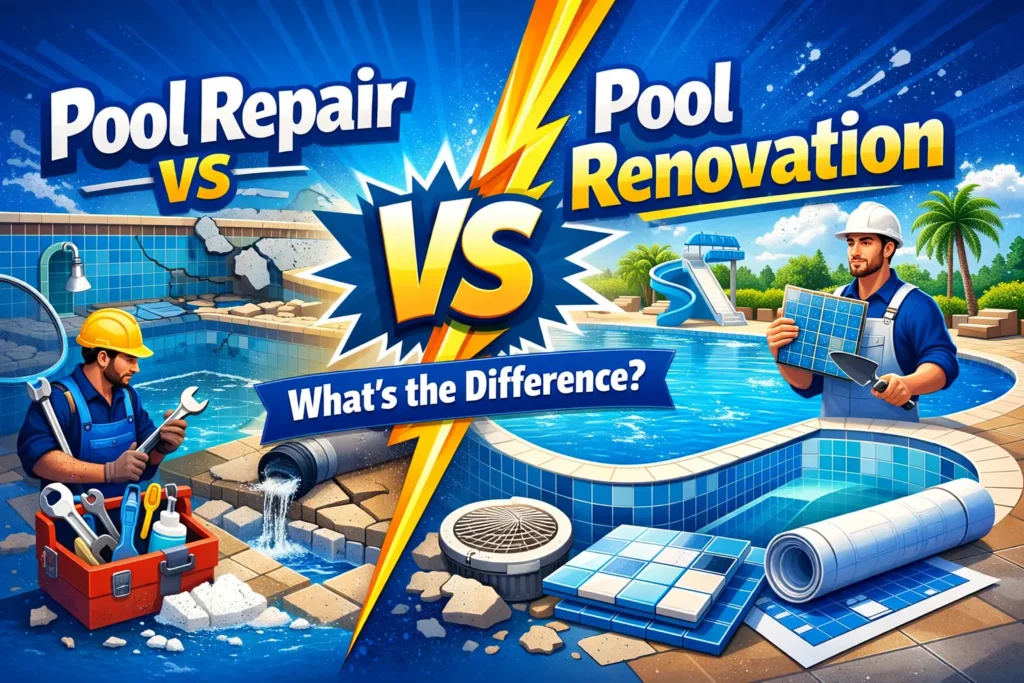
Pool repair addresses a specific problem, such as a cracked tile, a failed grout joint, or a plumbing leak, without changing the overall structure or design of the pool. Pool renovation is a broader scope of work that rebuilds or upgrades multiple elements of the pool, often including waterproofing, full retiling, and equipment upgrades. Repair fixes what is broken. Renovation transforms the whole pool. Most pool owners in Singapore reach a point where they are not sure which one they actually need. The pool looks rough, a few tiles have come off, maybe the water level drops a bit too fast, and the question becomes: do I fix the specific things I can see, or do I start fresh?
The wrong choice costs money. Doing repairs on a pool that genuinely needs renovation is like putting new paint on a wall with rotting timber behind it. It looks fine for a year, then you are back to square one. Going straight to renovation on a pool that just needs a tile repair wastes tens of thousands of dollars. This guide helps you make the right call.
What is Pool Repair?
What does pool repair include?
Pool repair targets specific, isolated problems without rebuilding the pool. It is the right response when the damage is localised and the surrounding structure is sound. Repair work is faster, less disruptive, and significantly cheaper than renovation. Common pool repair jobs in Singapore include:
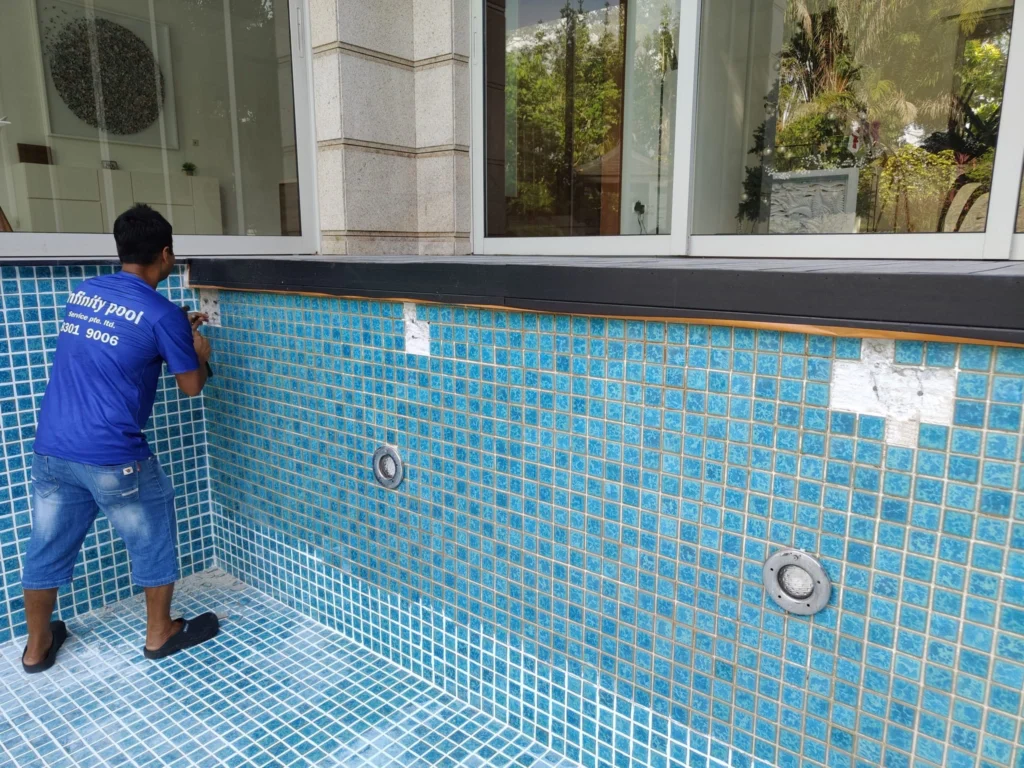
- Replacing cracked or hollow tiles in a specific section of the pool wall or floor
- Regrouting deteriorated grout joints to stop water ingress behind tiles
- Crack injection to seal hairline cracks in the pool shell
- Fixing plumbing faults such as broken pipes, leaking fittings, or failed valves
- Resealing skimmer boxes and return jet fittings that have developed gaps
- Patching small areas of failed waterproofing without removing all tiles
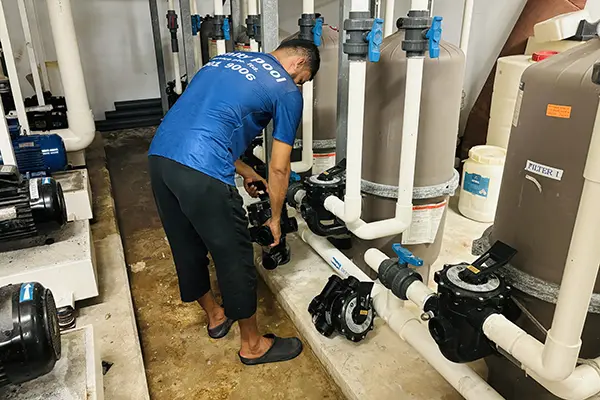
- Pump, filter, or equipment repairs where one component has failed
The common thread is this: repair work is targeted. A specific thing has failed. You fix that thing. The rest of the pool remains in service. Repair is the right call when the pool structure is fundamentally sound and the problems are isolated rather than widespread.
What is Pool Renovation?
What does pool renovation include?
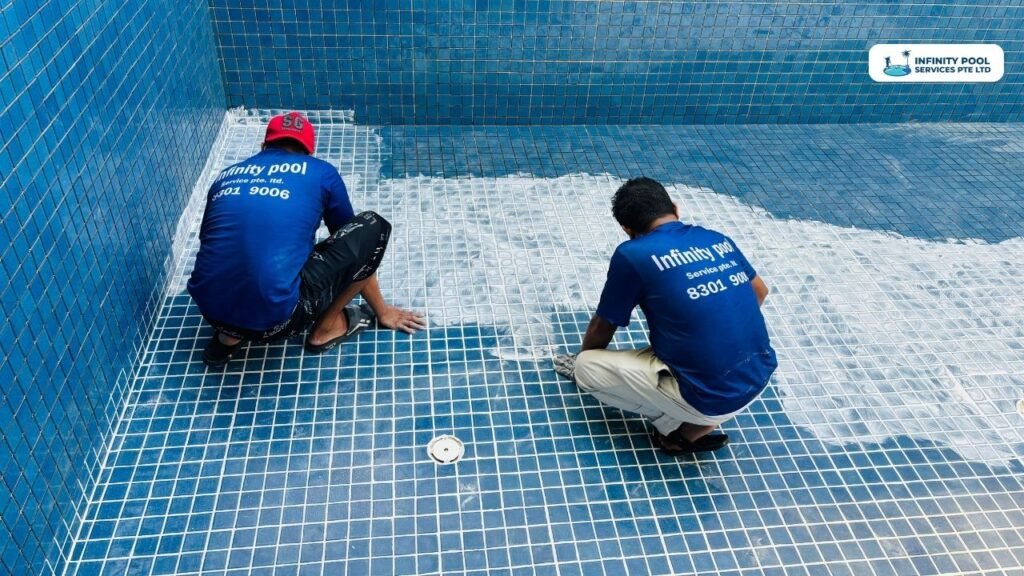
Pool renovation is a comprehensive project that rebuilds the pool’s surfaces, structure, and often its equipment systems from the substrate up. The pool is fully drained, all tiles and surface coatings are removed, the waterproofing layer is reapplied, and the pool is retiled and refinished. It is the right response when deterioration is widespread, when multiple systems are failing together, or when the owner wants to change the pool’s design.
A full pool renovation in Singapore typically includes:
- Full tile removal across all pool surfaces
- Structural crack repairs and shell preparation
- Application of a new waterproofing membrane
- Full retiling with new tiles and fresh grout
- New coping, pool edge, and surrounds where required
- Equipment upgrades such as a new pump, filter, or salt chlorination system
- Changes to pool shape, depth, or features (for more extensive renovations)
Renovation takes longer (typically 2 to 4 weeks for a residential pool), costs significantly more, and requires the pool to be out of service for the full duration. But the result is a pool that is effectively reset to new condition. For full details on what our renovation work covers, Visit Our Pool Repair & Renovation service page.
Pool Repair vs Pool Renovation: Side-by-Side Comparison
| Factor | Pool Repair | Pool Renovation |
| Scope | Targeted, isolated fix | Comprehensive rebuild of surfaces and systems |
| Downtime | 1 to 5 days typically | 2 to 4 weeks typically |
| Cost range (SGD) | SGD 300 to SGD 5,000 | SGD 8,000 to SGD 40,000+ |
| Pool draining required | Sometimes (depends on repair type) | Always |
| Waterproofing redone | Only where needed | Yes, as part of full renovation |
| Equipment upgraded | Not typically | Often included |
| Lifespan of result | 2 to 5 years depending on scope | 8 to 15 years with proper maintenance |
| Right when | Damage is specific and localised | Damage is widespread or pool is aging overall |
How to Tell Which One Your Pool Actually Needs
This is where most pool owners get stuck. The visible damage tells part of the story. The condition beneath the tiles tells the rest, and you cannot see that without a proper inspection. That said, there are clear patterns that point in one direction or the other.
Signs your pool probably needs repair, not renovation
- One section of tiles has come off, but the surrounding tiles are solid and bonded
- You have a specific leak that has been traced to a fitting, pipe joint, or skimmer
- The grout is deteriorating in certain areas but most joints are still intact
- The pool structure is less than 10 years old and has no history of major problems
- The equipment (pump, filter) is performing correctly and is relatively new
- The pool appearance is generally acceptable aside from the specific damage
In these situations, targeted repair addresses the problem without the cost and disruption of a full renovation.
Signs your pool probably needs renovation, not just repair
- Tiles are coming off in multiple areas, not just one spot
- You tap tiles across the pool and hear hollow sounds in large sections, meaning the bond has failed broadly
- The grout lines are deteriorating everywhere, not just in patches
- The pool has a history of repeated tile failures despite previous repairs
- You are losing water consistently and no specific leak point has been identified, suggesting the waterproofing membrane has failed broadly
- Visible staining, surface blistering, or efflorescence (white mineral deposits) appears across large areas
- The pool is more than 15 years old and has never had a full renovation
- The equipment is aging, inefficient, and due for replacement anyway
- You want to change the design, layout, or features of the pool
A pool that has been repaired multiple times in the same areas is usually telling you the same thing: the root cause has not been fixed. That root cause is almost always a failed waterproofing layer or a structurally compromised substrate. Repair will not solve it permanently.
The hollow tile test
Tap your pool tiles with a hard object across all surfaces. A solid tile produces a flat, dense sound. A hollow tile produces a higher-pitched, slightly echoing sound. This tells you the tile has separated from its adhesive bed. If you find hollow tiles in one section: targeted repair is possible. If hollow tiles appear broadly across the pool floor and walls: the adhesive bed or waterproofing beneath has failed widely, and renovation is the more cost-effective long-term solution.
The Hidden Cost of Choosing Repair When Renovation is Needed
This is the part most contractors will not tell you clearly enough. When a pool has widespread waterproofing failure, every repair you do is a temporary fix. You replace the tiles. The waterproofing behind the new tiles is still failing. Water moves behind them. Within 18 to 24 months, the same tiles start coming off, or different ones nearby. You have now paid for two rounds of tile work plus labour, and the pool still has the same underlying problem.
A full renovation in this scenario costs more upfront but costs less over a 5-year horizon. The waterproofing is replaced properly, the substrate is prepared correctly, and the new tiles have a sound base to bond to. Getting a professional pool inspection before committing to either path protects you from this trap. A good contractor will tell you honestly which approach makes sense for your pool’s actual condition.
What about Regrouting? Where does that fit?
Regrouting sits between routine repair and renovation. It is more comprehensive than fixing a few individual tiles but less involved than a full renovation. Pool regrouting means removing all the deteriorated grout across the pool’s tile joints and replacing it with fresh, waterproof grout. The tiles themselves stay in place. The pool shell is not touched. There is no waterproofing work involved. Regrouting is the right call when:
- The tiles are in good condition and bonded solidly to the substrate
- The grout joints are failing broadly (not just in patches)
- The waterproofing layer beneath the tiles is still intact
- There are no hollow tiles and no structural cracks
If you are not sure whether regrouting, repair, or renovation is the right scope, Our Swimming Pool Regrouting service page explains that service in detail, and the blog Pool Re-Grouting vs Pool Renovation covers the comparison from that angle.
The Role of Waterproofing in this Decision
One factor drives more repair-versus-renovation decisions than any other: the condition of the waterproofing membrane beneath the tiles. When the membrane is intact, targeted repairs work. You fix the tile or the grout, the substrate is protected, and the repair holds. When the membrane has failed, nothing applied above it will last. You can regrout perfectly and still lose water. You can replace tiles with premium materials and they will still detach within two years. A failed waterproofing membrane means renovation. There is no shortcut around it.
During any inspection, a good contractor will assess whether the membrane has failed and where. If the failure is isolated to one area (around a fitting that has been leaking, for example), a localised waterproofing repair is possible. If it has failed across large sections of the pool, full renovation is the only lasting solution. Our Pool Waterproofing Singapore page covers what waterproofing failure looks like, how it is assessed, and what proper remediation involves.
Cost Reality: What Repair and Renovation Actually Cost in Singapore
Pool repair costs in Singapore
Repair costs vary widely depending on the type and scope:
- Individual tile replacement: SGD 50 to SGD 150 per tile (for a small number of tiles)
- Section tile repair (10 to 30 tiles): SGD 500 to SGD 2,000
- Partial regrouting (one wall or floor section): SGD 600 to SGD 2,500
- Crack injection and sealing: SGD 300 to SGD 1,500
- Plumbing repair (leak at fitting or pipe): SGD 400 to SGD 2,000
- Leak detection plus repair: SGD 500 to SGD 3,000
For regrouting costs specifically, the blog How Much Does Swimming Pool Re-Grouting Cost in Singapore? covers the full breakdown.
Pool Renovation Costs in Singapore
A full residential pool renovation in Singapore typically ranges from SGD 8,000 to SGD 40,000+ depending on:
- Pool size and shape
- Tile selection (standard mosaic tiles vs premium imported tiles)
- Whether the pool coping and surrounds are being replaced
- Equipment upgrades included in the scope
- Waterproofing system selected
- Any structural work required before tiling
A standard 8m x 4m residential pool renovation covering full retiling, waterproofing, and new grout typically costs SGD 12,000 to SGD 22,000 in Singapore. Adding equipment upgrades or premium tiles moves the number higher. For a detailed cost guide, see our upcoming blog on How Much Does Pool Renovation Cost in Singapore.
How the Decision Process Works With a Professional Contractor
A credible pool contractor will not quote you for renovation when repair is sufficient, and will not tell you repair is enough when renovation is clearly needed. The financial incentives actually run both ways, so the only reliable guide is an honest inspection. Here is how a proper assessment works:
- Visual inspection of all pool surfaces, tile bond, grout condition, coping, and surrounds
- Tap test across all tiled surfaces to identify hollow or debonded areas
- Water level observation or bucket test to assess whether the pool is losing water and how fast
- Equipment check to assess pump, filter, and chlorination system condition
- Plant room and plumbing review to identify any equipment-side leaks or faults
- Written report and recommendation covering what needs to be done, why, and what each option will cost
This process takes 30 to 60 minutes on a residential pool. It should be done before any commitment is made to either repair or renovation work. We offer free site inspections for all residential and condo pool clients across Singapore. Book yours here or call +65 8301 9006.
When Repair and Renovation Happen Together
Sometimes the right answer is a combination. A pool that has one section of widespread tile failure alongside a structurally sound remainder might need:
- Full renovation of the damaged section (remove tiles, repair waterproofing, retile)
- Targeted repair and regrouting in the sections that are still bonded
This partial renovation approach is common and often the most cost-effective path. It addresses the actual problem areas without the cost of rebuilding sections that are performing fine.The key is that a partial renovation must address the waterproofing in the affected areas. Retiling a section without first checking and rectifying the waterproofing beneath it will produce the same outcome as before.
Related Services at Infinity Pool Services
Depending on what your inspection reveals, these services may be relevant to your situation.
- Pool Repair & Renovation Singapore — Full details on what our repair and renovation work covers
- Pool Waterproofing Singapore — Critical to any renovation and many repair jobs
- Pool Leak Detection & Repair Singapore — If water loss is part of the picture
- Swimming Pool Regrouting — When grout failure is the primary issue
- Swimming Pool Tile Repair & Replacement — For targeted tile work
- Pool Salt Chlorination Installation Singapore — Often upgraded during renovation while the pool is drained
- How to Spot and Fix Leaks in Your Pool in Singapore — Related reading on identifying leak sources
- Swimming Pool Tile Repair and Replacement: Expert Checklist — Useful if tile damage is your main concern
Frequently Asked Questions
What is the difference between pool repair and pool renovation?
Pool repair fixes a specific, isolated problem such as a cracked tile, a leak at a fitting, or a section of failed grout. Pool renovation is a full rebuild of the pool’s surfaces and often its equipment, covering waterproofing, complete retiling, and structural rectification. Repair is targeted. Renovation is comprehensive.
How do I know if my pool needs repair or renovation?
The clearest indicator is how widespread the damage is. If you have isolated tile failures, a specific leak point, or grout deterioration in one area, repair is usually sufficient. If tiles are hollow-sounding across large sections, the pool is losing water with no specific source, or the pool is over 15 years old with no renovation history, renovation is likely the right call. A professional inspection confirms it.
How much does pool repair cost in Singapore?
Pool repair costs in Singapore range from as little as SGD 300 for minor tile or grout work up to SGD 5,000 for more involved repair scopes including leak detection and plumbing faults. The cost depends entirely on what needs to be fixed and where.
How much does pool renovation cost in Singapore?
A full pool renovation for a standard residential pool in Singapore typically ranges from SGD 8,000 to SGD 40,000 depending on pool size, tile selection, waterproofing system, and whether equipment upgrades are included. Most landed home pool renovations fall between SGD 12,000 and SGD 22,000.
Can I repair a pool instead of renovating to save money?
Sometimes yes, sometimes no. If the damage is genuinely isolated, repair saves money. If the pool has widespread waterproofing failure or multiple failing systems, repeated repairs will cost more over 3 to 5 years than a renovation done once properly. A professional inspection helps you make the right financial decision.
How long does pool repair take compared to renovation?
Most pool repairs take 1 to 5 days. A full pool renovation typically takes 2 to 4 weeks for a residential pool, depending on the size and scope of work, plus drying and curing time for the waterproofing layer before tiling can begin.
Does pool renovation always include waterproofing?
Yes. A proper pool renovation always includes the application of a new waterproofing membrane after tiles are removed and before new tiles are laid. Any renovation that skips waterproofing is not a renovation, it is just a retile. The tiles will fail again on the same timeline as before.
When is regrouting enough instead of renovation?
Regrouting is sufficient when the tiles are solidly bonded, no hollow tiles are present, the grout joints are deteriorating broadly but the waterproofing beneath is still intact, and there is no ongoing water loss. If tiles are hollow or water loss is occurring, regrouting alone will not solve the problem.
Can I get a partial renovation instead of a full one?
Yes. If one section of the pool has widespread failure while the rest is sound, a partial renovation of the affected section is a legitimate and often cost-effective approach. The key is that waterproofing must be addressed in the renovated section, not just the tiles.
How often do pools in Singapore need renovation?
Most pools in Singapore need a full renovation every 10 to 15 years under normal usage conditions, assuming regular maintenance has been carried out throughout. Pools that have been neglected, have had repeated tile failures, or have never had a waterproofing check may need renovation sooner.