
Introduction
You finally have a swimming pool at home. Now comes the big question — should you go for a saltwater pool or stick with a traditional chlorine pool? Many homeowners in Singapore are asking this exact question right now. Both types of pools keep your water clean. Both have their pros and cons. But they work very differently, and the choice you make will affect how much time, money, and effort you spend on your pool every single month.
In this guide, we’ll break everything down in simple terms. You’ll learn how each system works, what it costs, how it feels to swim in, and which one makes the most sense for Singapore’s hot and humid climate. At Infinity Pool Services Pte Ltd, we have helped hundreds of homeowners across Singapore maintain both types of pools. So everything you read here comes from real hands-on experience — not just guesswork. Let’s get started.
What Is a Saltwater Pool?
A saltwater pool is still a chlorine pool — just a smarter one. Instead of you adding chlorine by hand every week, the pool generates its own chlorine automatically. It does this through a special device called a salt chlorine generator (also called a salt cell or chlorinator). You add salt to the water, the generator converts it into chlorine through a process called electrolysis, and that chlorine keeps your pool clean and safe.
The result? The water feels softer and silkier. There’s little to no harsh chlorine smell. And you don’t have to handle bags of chlorine chemicals every week. Saltwater pools are becoming more popular in newer Singapore homes, especially in private landed properties, condominiums with their own pools, and luxury bungalows.
Key facts about saltwater pools:
- The water contains about 3,000–4,000 ppm of salt (much less salty than seawater, which is around 35,000 ppm)
- You still need to test and balance the water — just less often
- The salt cell needs to be cleaned and replaced every few years
- Setup costs are higher, but long-term chemical costs are lower
What is a Chlorine Pool?
A chlorine pool is the traditional and more common type. You add chlorine directly to the water yourself, using tablets, liquid, or granules. You also need to test the water regularly and adjust the chemical levels as needed. Chlorine works by killing harmful bacteria, algae, and other germs in the water. When done correctly, it keeps your pool sparkling clean. The downside? If the chlorine level gets too high, it can cause red eyes, itchy skin, and a strong chemical smell. If it drops too low, algae can grow quickly — especially in Singapore’s hot and humid weather.
Key facts about chlorine pools:
- You add chlorine manually — weekly or even more often in hot weather
- Water testing must be done frequently (at least twice a week in Singapore)
- Shock treatment is needed every few weeks to deep-clean the water
- Lower upfront cost, but more ongoing effort and chemical expenses
If you’ve noticed your pool turning green after heavy rain, that’s a sign the chlorine balance has dropped. We cover this in detail in our guide on green swimming pool recovery in Singapore.
Saltwater vs Chlorine Pool: Side-by-Side Comparison
Here’s a clear comparison to help you decide:
| Feature | Saltwater Pool | Chlorine Pool |
|---|---|---|
| Chlorine Source | Auto-generated from salt | Added manually |
| Water Feel | Soft, smooth, gentle on skin | Can be harsh if not balanced |
| Smell | Mild or no chemical smell | Strong chlorine smell if over-dosed |
| Maintenance Frequency | Monthly checkups | Weekly or more |
| Setup Cost (Singapore) | SGD $5,000 – $12,000 | SGD $3,000 – $8,000 |
| Annual Chemical Cost | SGD $100 – $250 | SGD $300 – $700 |
| Salt Cell Replacement | Every 3–7 years | Not applicable |
| Long-Term Cost | Lower | Higher |
| Equipment Care | Salt cell cleaning required | Basic pump and filter care |
| Corrosion Risk | Higher (especially on metal parts) | Lower |
| Eco-Friendliness | Fewer chemicals, more eco-friendly | Higher chemical usage |
| NEA Compliance (Singapore) | Needs approval as alternative system | Already fully approved |
How Does Salt Pool Maintenance Service Work in Singapore?
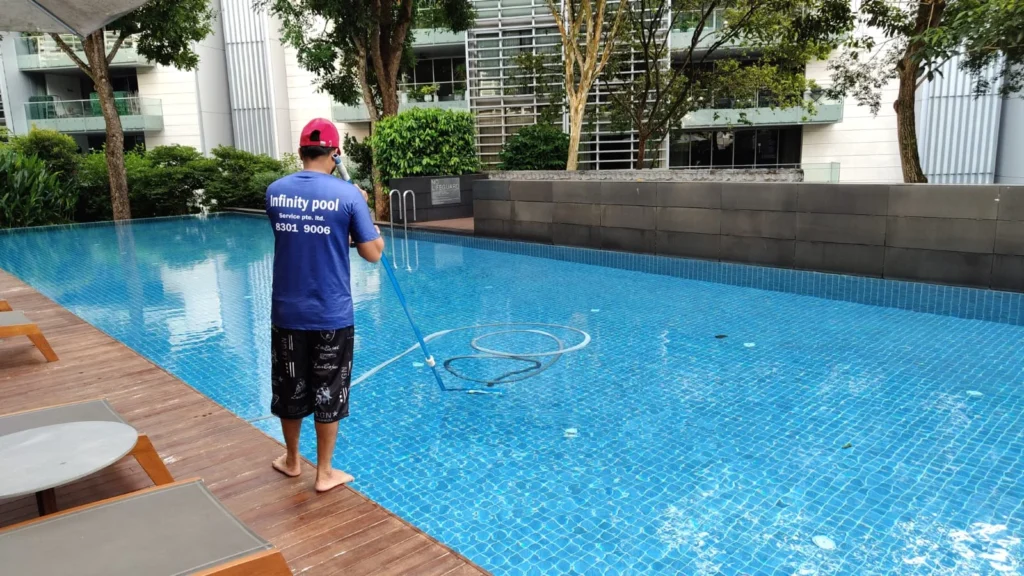
One of the biggest reasons homeowners choose saltwater pools is the promise of “low maintenance.” And yes — it is easier than a chlorine pool. But it is not zero maintenance. Here is what salt pool maintenance service in Singapore typically includes:
1. Salt Level Testing
You need to check the salt concentration in the water regularly. Too little salt, and the generator won’t produce enough chlorine. Too much, and it can damage pool equipment and surfaces. The ideal range is 3,000–4,000 ppm.
2. pH Balancing
Saltwater pools tend to push the pH upward over time. High pH makes the chlorine less effective, so you’ll need to add a pH reducer (like muriatic acid) every few weeks to keep the balance right.
3. Salt Cell Cleaning
The salt cell (the heart of the system) builds up calcium deposits over time. This needs to be cleaned with a mild acid solution every 3 to 4 months, or it will stop producing chlorine efficiently.
4. Filter and Pump Checks
Your filter system still needs regular cleaning. Sand filters should be backwashed monthly, and cartridge filters need rinsing. The pump needs to run long enough each day to circulate all the water properly. If you’re unsure whether your filter is working well, read our complete guide on swimming pool filter servicing in Singapore.
5. Visual Inspection
Even with a generator running, algae can grow in corners, on walls, and behind steps. Regular brushing and vacuuming is still needed to stop build-up before it becomes a problem.
Why Singapore’s Weather Affects Your Pool Choice
Singapore’s climate is warm, humid, and rainy year-round. This has a big impact on pool maintenance — for both saltwater and chlorine pools.
Here’s what Singapore’s weather does to your pool:
- Heat speeds up algae growth. Warm temperatures are perfect conditions for green algae to multiply fast. This is why common swimming pool problems in Singapore almost always include green water and algae.
- Heavy rain dilutes chemicals. After a heavy tropical downpour, your pool’s chlorine levels can drop significantly. This is a bigger issue for chlorine pools, which need manual re-dosing after every major rainstorm.
- UV rays break down chlorine. Strong Singapore sunshine degrades chlorine faster. Saltwater pools can be adjusted to produce more chlorine during hotter months, giving them a slight edge.
- Humidity encourages scale build-up. On saltwater pools, calcium scale on the salt cell and pool tiles is a common issue. Regular descaling and tile care is important.
For homeowners who don’t want to deal with weekly chemical adjustments, a saltwater pool with professional salt pool maintenance service in Singapore is usually the easier long-term choice.
Salt Water Pool Maintenance: Common Mistakes to Avoid
Even with a saltwater system, things can go wrong if the pool is not cared for properly. Here are the most common mistakes homeowners make:
1. Ignoring the salt cell too long. A dirty or worn-out cell stops producing chlorine. Many homeowners don’t notice until the water turns green.
2. Not testing pH often enough. Because saltwater pools naturally raise pH, skipping tests leads to cloudy water and skin irritation.
3. Using the wrong cleaning products. Harsh metal brushes or the wrong acid concentrations can damage the salt cell membranes. Always use products that are compatible with saltwater systems.
4. Not checking for leaks. Even a small leak can throw off your salt and chemical balance. If your water level keeps dropping, you may have a leak. Learn more about how to spot and fix leaks in your pool in Singapore.
5. Skipping professional servicing. Some homeowners try to handle everything themselves. But without professional tools and experience, it’s easy to miss problems until they become expensive repairs. Check out the top swimming pool maintenance mistakes Singapore homeowners make to avoid costly errors.
How Much Does Salt Pool Maintenance Cost in Singapore?
Cost is a key factor in this decision. Here’s a realistic breakdown:
Saltwater Pool — Estimated Annual Costs
| Service | Estimated Cost (SGD) |
|---|---|
| Salt (annual top-up) | $50 – $100 |
| pH and other chemicals | $80 – $150 |
| Salt cell cleaning (2x per year) | $60 – $120 |
| Professional maintenance visits | $600 – $1,200/year |
| Salt cell replacement (every 5 years) | $800 – $2,000 (amortised) |
Chlorine Pool — Estimated Annual Costs
| Service | Estimated Cost (SGD) |
|---|---|
| Chlorine tablets or liquid | $200 – $400 |
| Other balancing chemicals | $100 – $200 |
| Shock treatments | $60 – $150 |
| Professional maintenance visits | $600 – $1,200/year |
For a full breakdown of costs, read our ultimate guide to swimming pool maintenance and equipment replacement cost in Singapore.
Health and Safety: Which Pool Is Safer for Your Family?
This is one area where saltwater pools have a clear edge.
For Skin and Eyes
Saltwater pools produce steadier, lower levels of chlorine. This means less irritation for swimmers with sensitive skin, eczema, or eye sensitivity. Children and elderly family members especially benefit from the softer water.
Chlorine pools can cause red eyes and dry, itchy skin when chlorine levels spike — which happens often if the pool is not tested frequently.
For Air Quality
In poorly ventilated indoor pools, chloramines (compounds formed when chlorine reacts with sweat or urine) can cause breathing problems. Saltwater pools produce fewer chloramines, making the air around the pool more comfortable.
For Safety
Both pool types are safe when properly maintained. The key is regular testing and professional servicing — regardless of which system you choose. If you want to keep your family safe and save money at the same time, read our guide on why regular pool maintenance saves you money long-term.
Pool Equipment: What You Need to Know
Whether you choose a saltwater or chlorine pool, your pool equipment plays a huge role in keeping the water clean.
Pumps
Your pump circulates the water through the filter. A weak or failing pump means poor circulation, which leads to cloudy water and algae growth. If your pump is making strange noises or not working efficiently, it may be time for a swimming pool pump repair or replacement.
Filters
Filters trap dirt, debris, and algae before they enter the water. Both pool types need clean filters to function well. A blocked or damaged filter is one of the most common reasons pools become cloudy or unsafe.
Tiles and Grout
Saltwater can be harder on pool tiles and grout over time. If you notice cracked grout or loose tiles around your pool, don’t ignore it. It can lead to bigger structural issues. Our team offers professional swimming pool tile repair and replacement in Singapore, as well as swimming pool regrouting services to keep your pool looking great.
So Which Should You Choose?
Here’s a simple way to decide:
Choose a saltwater pool if you:
- Want lower long-term chemical costs
- Prefer softer, more comfortable water
- Have family members with sensitive skin or allergies
- Don’t want to handle chemicals weekly
- Are building a new pool and can afford the higher setup cost
Choose a chlorine pool if you:
- Have a tighter budget upfront
- Want faster and simpler regulatory approval
- Already have an existing chlorine system in good condition
- Are comfortable with regular chemical testing and dosing
And whichever system you pick, remember this: the pool that’s maintained properly will always beat the pool that’s neglected. Even the best saltwater system can fail without regular care.
How to Choose the Right Pool Maintenance Contractor in Singapore
Not all pool contractors are equal. When hiring a professional for salt pool maintenance service in Singapore (or chlorine pool care), look for these things:
- Experience with both saltwater and chlorine systems
- Knowledge of NEA regulations and local water quality standards
- Transparent pricing with no hidden fees
- A track record of positive reviews from Singapore homeowners
- Full range of services, from cleaning to equipment repair
Read our detailed guide on how to choose the best swimming pool maintenance contractor in Singapore before making your decision.
Why Homeowners in Singapore Trust Infinity Pool Services Pte Ltd
At Infinity Pool Services Pte Ltd, we have been helping Singapore homeowners take care of their pools for years. We work with all types of pools — saltwater, chlorine, private home pools, and condominium pools. Our team handles everything, including:
- Swimming pool cleaning — regular and deep cleaning to keep water crystal clear
- Salt pool maintenance service — full system check, salt cell cleaning, pH balancing
- Filter and pump servicing and replacement — so your equipment always runs at its best
- Pool tile repair and regrouting — fixing wear and tear before it becomes a bigger problem
- Green pool recovery — bringing badly neglected pools back to life fast
- Leak detection — finding hidden leaks that waste water and cost you money
- Equipment repair and replacement — for pumps, filters, salt cells, and more
We know Singapore’s climate. We know the challenges that come with it. And we know how to keep your pool clean, safe, and enjoyable all year round — without you having to worry about it.
Frequently Asked Questions
Is a saltwater pool really better for sensitive skin?
Ans: Yes. The steadier, lower chlorine levels in saltwater pools are gentler on skin and eyes. Many swimmers with eczema or chlorine sensitivity find saltwater pools much more comfortable.
Can I convert my chlorine pool to saltwater in Singapore?
Ans: Yes. The conversion involves installing a salt chlorine generator and making some adjustments to your plumbing. Our team can handle the full conversion for you. Just contact us for a quote.
Do I still need a pool contractor for a saltwater pool?
Ans: Absolutely. Saltwater pools still need regular servicing — pH testing, salt cell cleaning, filter maintenance, and equipment checks. Professional service ensures everything is working correctly and catches problems early.
How often should a saltwater pool be professionally serviced?
Ans: In Singapore’s climate, we recommend at least once a month. More frequent visits may be needed after heavy rain, periods of heavy use, or if the pool has been neglected.
Does salt damage my pool tiles or equipment?
Ans: It can, over time, especially if salt levels are too high or if metal components are not treated properly. Regular professional maintenance prevents serious salt-related damage.
Final Thoughts
Both saltwater and chlorine pools can be excellent choices for Singapore homeowners. The right option depends on your budget, your lifestyle, and how much time you want to spend on pool care. Saltwater pools offer softer water, lower long-term costs, and easier day-to-day maintenance. Chlorine pools are more affordable upfront and simpler to get approved. But here’s the truth: the type of pool matters less than the quality of care it receives. A chlorine pool that’s well maintained will always be better than a saltwater pool that’s ignored.
If you’re looking for professional salt pool maintenance service in Singapore or any kind of pool care the team at Infinity Pool Services Pte Ltd is ready to help. We cover all areas across Singapore and offer flexible service packages for every budget. Let us take care of your pool so you can just enjoy it.